














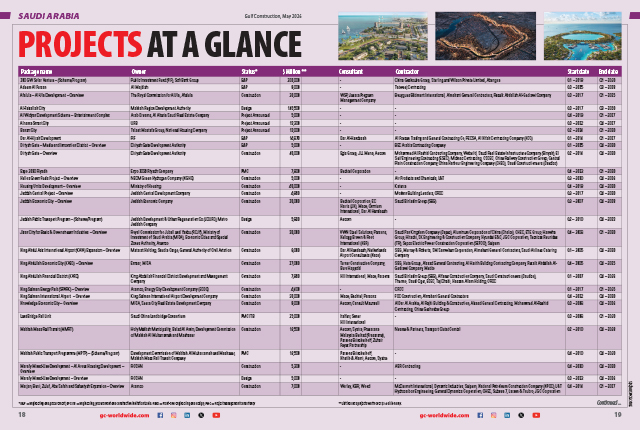





















































Link for Saudi Arabia Projects at a GlanceThe United Nations has warned that the world has entered a stage of “water bankruptcy”, calling for urgent digital transformation to safeguard dwindling global water resources.
In its Global Water Bankruptcy report released in January, the UN said aquifers are being irreversibly depleted as human demand outstrips natural replenishment. The findings are stark: three-quarters of the world’s population now live in water-insecure or critically water-insecure countries; more than half of the planet’s major lakes are shrinking; and two billion people reside on land subsiding due to groundwater overuse. Wetlands equal in size to the European Union have disappeared over the past 50 years.
The upcoming 2026 UN Water Conference, which will be held in the UAE in December (2 to 4) is expected to focus on digital efficiency, urging policymakers and utilities to “protect every drop.”
Addressing this challenge requires the use of digital technology to improve efficiency, reduce losses, and close funding gaps in utilities facing increasing operational and financial pressure.
“Digital solutions are no longer optional. They are now essential operational requirements,” says Jaime Barba, head of Xylem Vue, the digital solutions platform of US-based water technology company Xylem. “The future of water will be digital, or there will be no future.”
Five trends shaping water digitalisation
A new report, Water Technology Trends 2026: A Strategic Guide to the Future of Smart Water, released by Xylem Vue outlines five technology-driven solutions reshaping global water management: generative AI, agent-based architectures, cybersecurity reinforcement, advanced early warning systems, and data-driven public-private partnerships.
Artificial intelligence is emerging as a catalyst for transformation, turning fragmented datasets into actionable insights. Generative AI, in particular, is being adopted as an operational tool to break down information silos and mine value from unstructured data. This will enable utilities to become more resilient, efficient, and better equipped to measure, anticipate, and act in real time.
Xylem’s study also points to the growing role of agent-based architectures. These new approaches will enable natural language queries to be converted into analytical flows that can be audited and automated, with a special focus on security and control in critical infrastructures.
Cybersecurity remains central to digital transformation efforts. With utilities increasingly interconnected, safeguarding systems from attacks is now vital to ensuring water service continuity and public safety, the report said.
As extreme weather events become more frequent, early warning systems integrating high-resolution models, meteorological forecasts and real-time data are being deployed to predict hydrological responses and better protect communities.
Meanwhile, public-private partnerships (PPPs) remain pivotal in driving innovation. Projects such as Spain’s PERTE water resilience programme, the United States’ Sustainable Water Initiative for Tomorrow (SWIFT) and India’s West Bengal Drinking Water Sector Improvement Project highlight how cooperation, including collaboration between companies, can multiply operational efficiency and reduces risk, especially when data governance and interoperability are built in from the start.
Digital platform for smart utilities
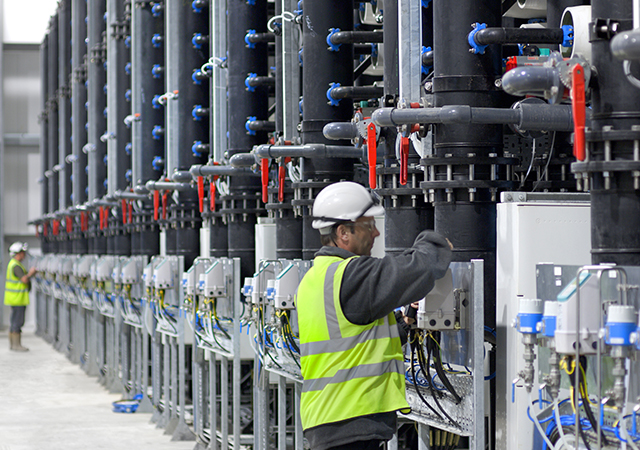
Xylem Vue’s integrated, hardware-agnostic software platform enables utilities to consolidate data from diverse sources, including legacy systems, to create a 360-degree view of their networks. The company says the platform’s modular suite of analytics tools helps utilities reduce losses, optimise investment, and improve resilience across the water cycle.