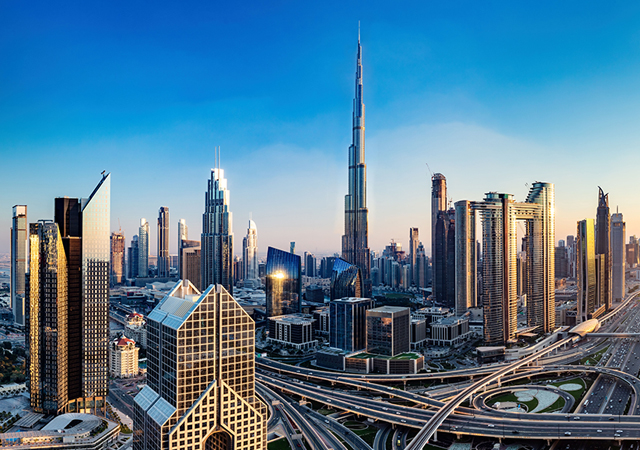




Property developers in Dubai are rubbing their hands in anticipation of yet another record year, building on a historic 2025 that firmly cemented the emirate’s position among the world’s most active real estate markets. According to official data from the Dubai Land Department, the sector recorded more than 270,000 total transactions in 2025, valued at AED 917 billion ($249.7 billion) – representing a 20 per cent year-on-year increase in value. The figures underscore the scale, liquidity and global appeal of Dubai’s property ecosystem.
Property prices rose 13 per cent year-on-year in 2025, extending an upward cycle spanning 22 consecutive quarters. The momentum has carried into early 2026. In January alone, 21,884 transactions were registered with a total value of AED107.96 billion – a sharp increase from roughly 14,000 transactions worth AED44 billion in January 2025.
Across 2025 and into early 2026, the emirate has witnessed a surge of high-value project launches, construction awards and milestone completions spanning waterfront destinations, urban regeneration districts and next-generation mixed-use communities, reinforcing Dubai’s position as one of the world’s most dynamic and closely watched markets as developers race to keep pace with demand. International and regional investors continue to view Dubai as a strategic safe haven offering political stability, tax efficiency and lifestyle advantages.
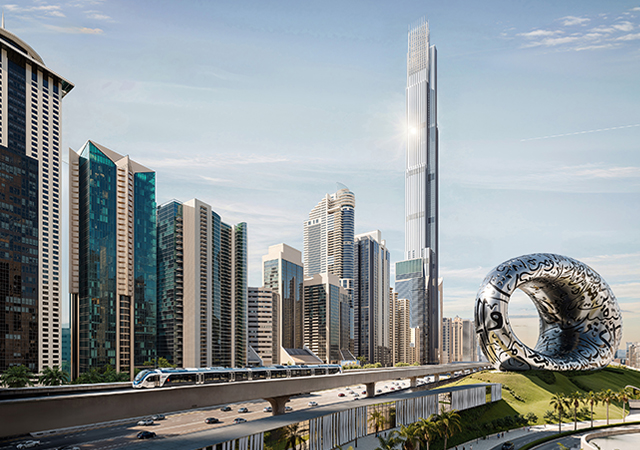
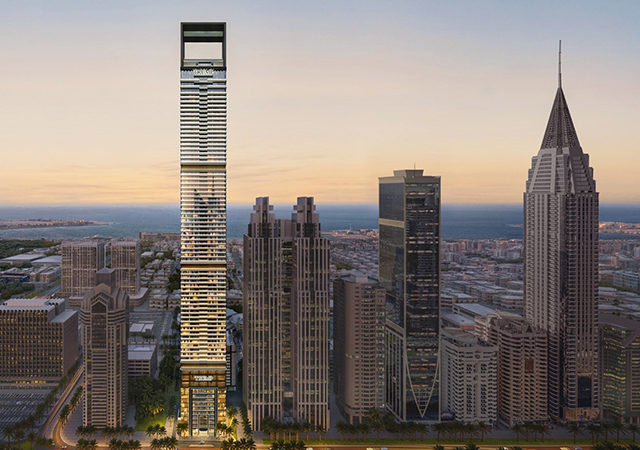
Azizi is pushing ahead on Burj Azizi, which is expected to be the world’s second-tallest tower at around 725 m.
Long-term residency initiatives such as the UAE’s Golden Visa programme, coupled with investor-friendly regulations, 100 per cent foreign ownership in many sectors, and the absence of income tax, have broadened the buyer base significantly over the past five years.
Off-plan sales remain a dominant force in the market, accounting for a substantial share of total transactions. Flexible payment plans, lower entry prices compared to completed units, and confidence in major master developers have encouraged both end-users and speculative investors to commit early in the development cycle. At the same time, the secondary market continues to demonstrate depth and liquidity, particularly in established communities.
Luxury & wellness focus
Luxury remains one of the strongest magnets in the market. Dubai has positioned itself as a global capital for ultra-high-net-worth individuals seeking waterfront mansions, branded residences and bespoke villas. Prime districts such as Palm Jumeirah, Downtown Dubai and Dubai Hills Estate continue to command premium prices, with record-breaking villa and penthouse transactions becoming increasingly common. The influx of global wealth, particularly from Europe, Asia and the CIS region, has reinforced Dubai’s standing as a luxury real estate powerhouse.
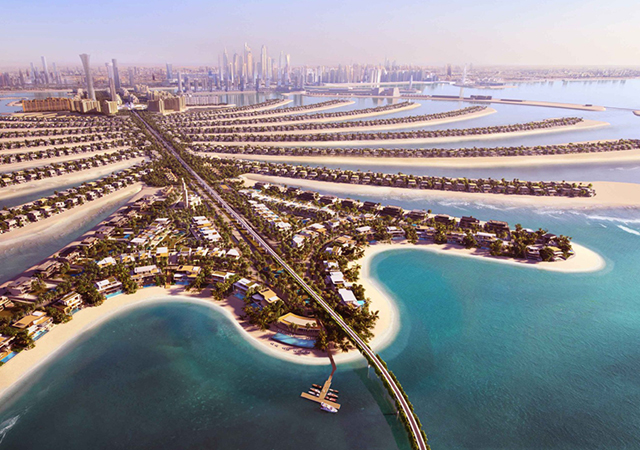
38 Palm Crown villas are currently under construction on Palm Jumeirah.
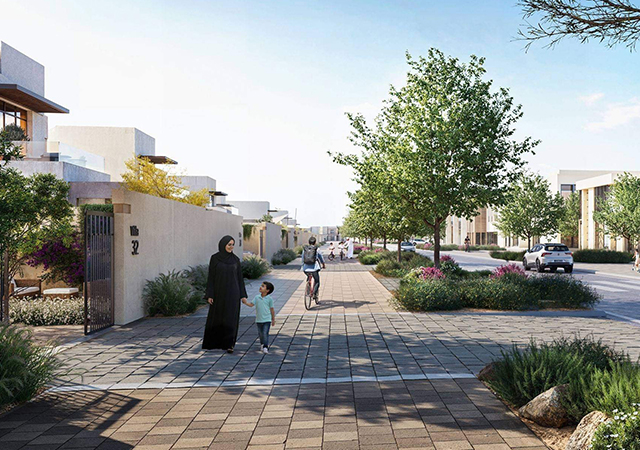
Beyond opulence, however, the nature of demand is evolving. Wellness, nature integration and sustainability are emerging as central themes shaping new launches. Developers are increasingly incorporating green building standards, energy-efficient systems, smart home technology and expansive landscaped spaces into masterplans. Communities that emphasise walkability, cycling tracks, wellness centres and access to open green areas are resonating strongly with both families and younger professional buyers.
Sustainability targets aligned with the UAE’s Net Zero 2050 strategy are also influencing design, construction materials and infrastructure planning. Sustainability and wellbeing are increasingly embedded within project design and construction strategies. Developments such as R.Evolution’s Eywa Tree of Life, which is nearing completion along the Dubai Water Canal, have set new benchmarks by achieving both LEED Platinum and WELL Platinum certifications, while others incorporate low-carbon materials, modular construction, renewable energy systems and climate-adaptive design features.
Urban regeneration
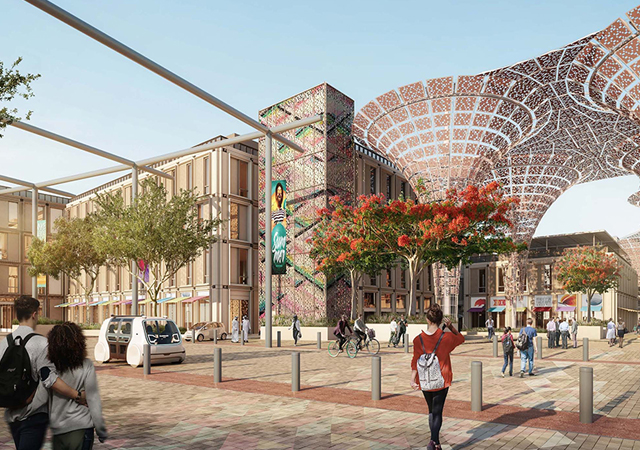
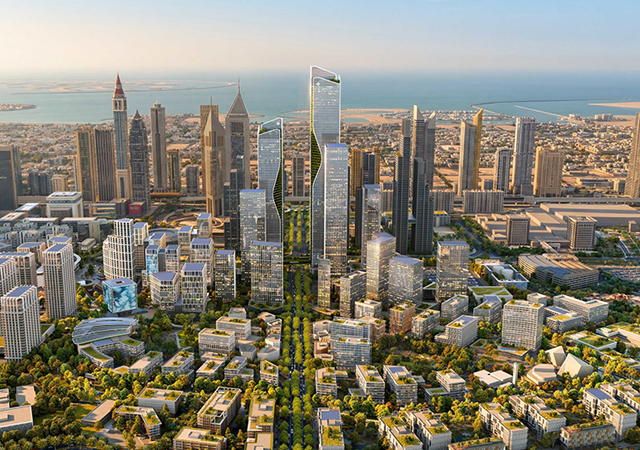
At the heart of the city’s urban transformation sits Expo City Dubai, the post-Expo hub rebranded as one of Dubai’s key future urban centres under the Dubai 2040 Urban Master Plan. Designed to house tens of thousands of residents and professionals, Expo City combines residential, cultural, innovation and commercial precincts with sustainability credentials – many communities within it are pre-certified to global green building standards. Its role as a major events venue further enhances demand for nearby housing and commercial property
Among the transformational projects taking shape at Expo City Dubai is Al Waha Residences. Contractors Arco Group and Al Futtaim Contracting have been appointed to deliver key works packages at Al Waha Residences, a luxury residential scheme comprising more than 500 apartments and duplex lofts across 42 buildings (see Page 41).
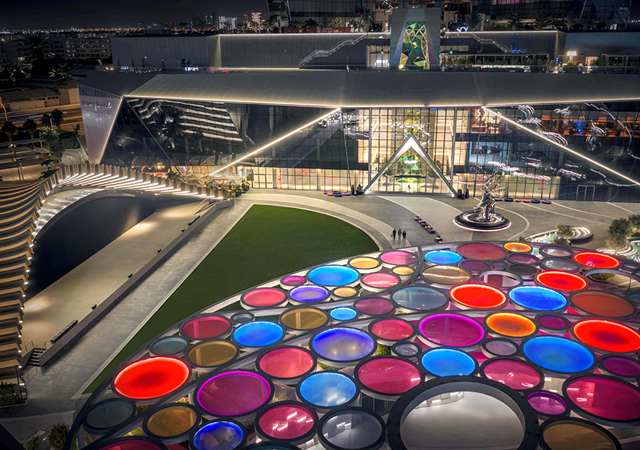
The newly-opened Plaza at Uptown Dubai, a 21,000-sq-m open-air space that reinforces cohesion across the community.
This legacy infrastructure of Expo 2020 sits at the heart of another growth corridor, Dubai South, the expansive urban district anchored by Al Maktoum International Airport. Dubai South has evolved from a logistics and industrial zone into a mixed-use city designed for residence, commerce and innovation, with steady inflows of business licences and new households. Developer Dubai South Properties has unveiled several residential and mixed-use projects, including the 10-million-sq-ft Hayat masterplanned community and the South Bay Mall retail hub, supporting the area’s evolution into a self-sustaining urban zone linked to Al Maktoum International Airport. Meanwhile, LEOS Developments’ AED5-billion masterplanned community in Wadi Al Safa 5 reflects growing demand for wellness-oriented, low-rise residential environments integrated with extensive green and leisure infrastructure.
Residential communities like The Pulse Beachfront have delivered thousands of units, with many more slated for handover in 2026 and beyond, positioning Dubai South as both a lifestyle hub and investment corridor tied to airport action and broader economic diversification.
Urban regeneration is also driving growth at Dubai Design District, where Meraas has unveiled an expanded 18-million-sq-ft residential masterplan that will reposition d3 as a creative-led waterfront neighbourhood. The development integrates canal-front living, cultural quarters, retail, hospitality and landscaped public realms, anchored by a pedestrian-first spine known as the Design Line. Designed to target LEED Silver certification, the project reflects Dubai’s shift toward walkable, human-centric urban environments that blend lifestyle, work and culture within a single district.
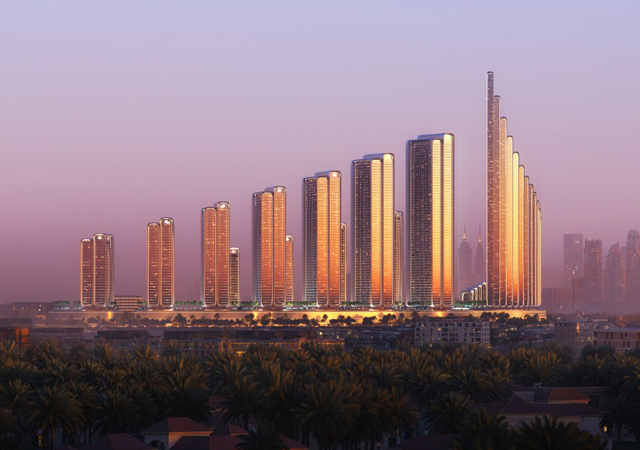
The AED30-billion Mercedes-Benz Places|Binghatti City will comprise 12 towers.
Branded residences
Branded residences and ultra-luxury developments remain a powerful force shaping Dubai’s skyline. Binghatti’s AED30-billion Mercedes-Benz Places|Binghatti City in Nad Al Sheba represents one of the most ambitious residential masterplans launched in the emirate, spanning more than 10 million sq ft and comprising 12 architecturally synchronised towers delivered in phases. The project illustrates how global lifestyle brands are increasingly partnering with developers to create large-scale, identity-driven communities rather than standalone towers.
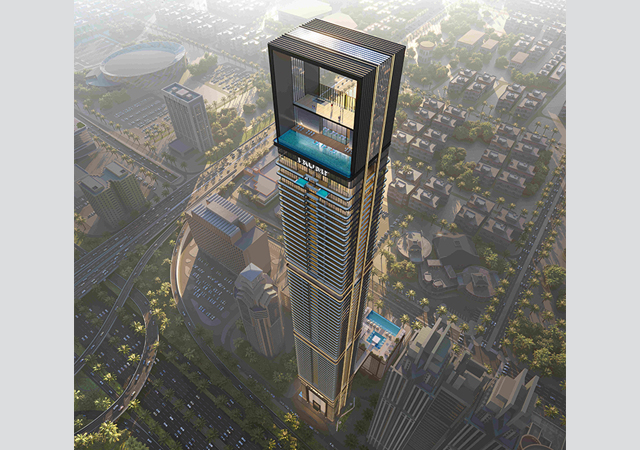
Dar Global has commenced enabling works for the 80-storey Trump International Hotel & Tower, Dubai on Shaikh Zayed Road.
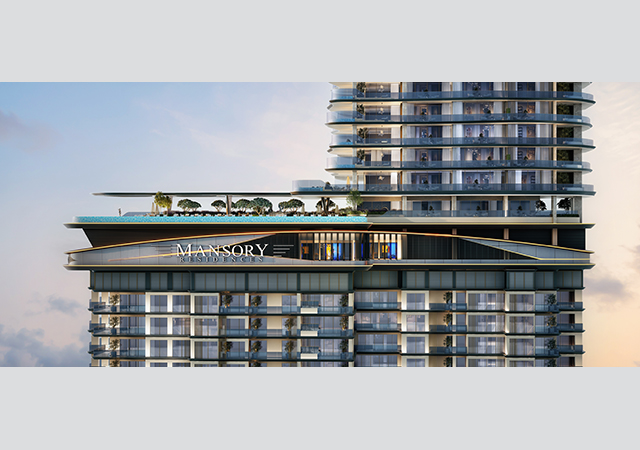
Similarly, Damac Properties continues to expand its branded portfolio, having topped out the 71-storey Cavalli Tower in Dubai Marina, an AED1-billion beachfront development featuring interiors by Roberto Cavalli. With structural works completed and internal finishes progressing, the tower is on track for handover next year, adding another fashion-led landmark to the emirate’s luxury residential stock. Another developer Amaal is bringing the branded Mansory Residences, a 60-storey development, to Mohammed Bin Rashid City (see page 32).
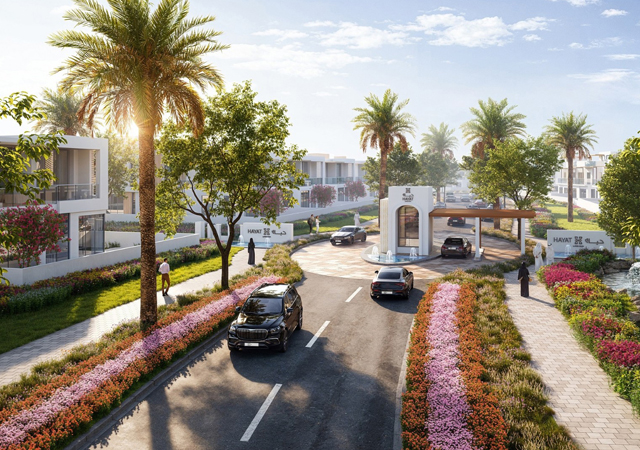
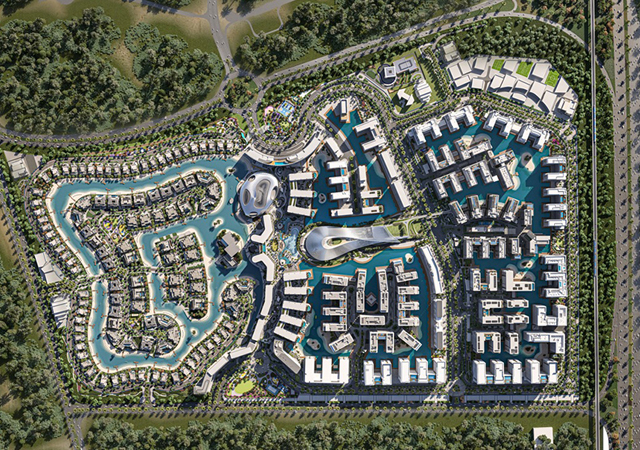
Hayat masterplanned community … taking shape in Dubai South.
Marque developments
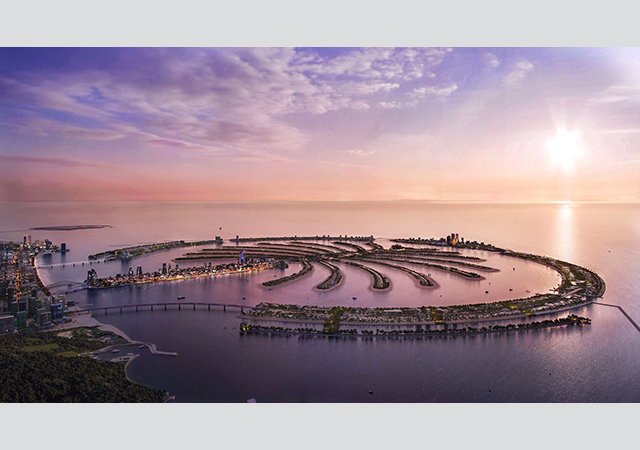
Among the marquee developments reshaping the landscape is Palm Jebel Ali, a sprawling new beachfront masterplan that is fast emerging as the next frontier of ultra-luxury living. Last year, Palm Jebel Ali overtook its neighbour Palm Jumeirah as the top destination for homes priced above AED20 million, accounting for roughly 21 per cent of all ultra-luxury transactions in this tier and generating over AED12 billion in sales value – a stunning performance for a project still in early phases of delivery. Palm Jebel Ali’s scale – with expansive development programmes, branded luxury collections and waterfront villas – encapsulates Dubai’s push into next-generation luxury real estate.
Palm Jumeirah and Dubai Islands remain focal points for high-end waterfront investment. Nakheel has awarded multiple major contracts, including AED400 million for the construction of 38 Palm Crown villas on Palm Jumeirah. and AED2.6 billion for the Bay Villas project at Dubai Islands, which will deliver 636 luxury units across five property typologies. These projects highlight the continued appetite for low-density, resort-style living supported by extensive infrastructure and public realm investment,
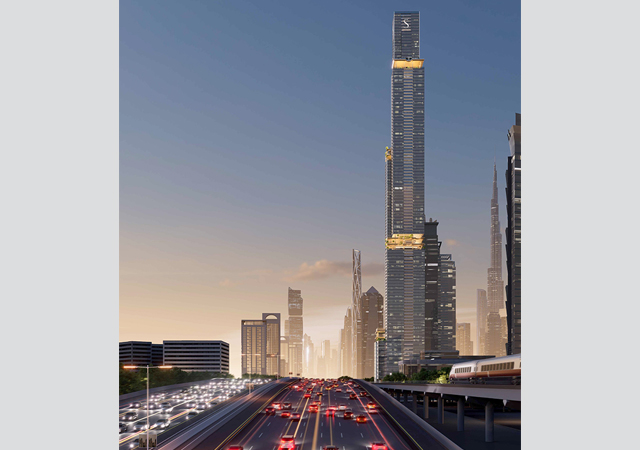
Sobha SkyParks, a 450-m skyscraper on Sheikh Zayed Road.
Dubai Islands, in particular, is emerging as a new residential frontier. Developers including Amirah, OCTA Development, Beyond Developments and Reef Luxury Developments have all advanced projects in the area, ranging from mid-rise apartment schemes to Missoni-branded residences and wellness-focused communities. Several projects have already moved into active construction phases, with piling, shoring and enabling works under way, underscoring the speed at which new waterfront zones are being delivered to market.
Along Sheikh Zayed Road and key arterial corridors, high-rise construction activity remains intense. Dar Global has commenced enabling works for the 80-storey Trump International Hotel & Tower, Dubai, a 350-m-tall mixed-use landmark that will feature luxury residences, hospitality offerings and exclusive private club facilities. Sobha Realty has also expanded its presence on Sheikh Zayed Road with multiple launches, including the 109-storey Sobha SkyParks and the 677-unit Mirage tower at Sobha Central, reinforcing the corridor’s status as Dubai’s most prestigious vertical residential address.
.jpg)
Eywa Tree of Life, along the Dubai Water Canal ... achieving both LEED Platinum and WELL Platinum certifications.
Also along Sheikh Zayed Road, Azizi Developments is pushing ahead on its flagship super-tower, Burj Azizi, which is expected to be world’s second-tallest tower at around 725 m, alongside a broad pipeline of residential, waterfront and community schemes across Dubai. Another landmark project in the developer’s porfolio is Azizi Riviera, a French Mediterranean–inspired master community in MBR City, which is now in its final delivery phase, with most of the 75 planned buildings either handed over or approaching completion. Beyond these two flagships, the group is also developing projects such as Azizi Milan, a large-scale, Italian-inspired residential master-community in Dubailand), Azizi Mina and Royal Bay on Palm Jumeirah, Creek Views in Dubai Healthcare City, Park Avenue and other mid-rise schemes in Meydan/MBR City, Venice in Dubai South, Amber and several clusters in Al Furjan, plus lifestyle communities like Beach Oasis in Studio City.
Collectively, the scale, diversity and pace of Dubai’s real estate development pipeline highlight a market that is not only expanding, but also maturing. With billions of dollars in projects under construction or recently launched, strong contractor participation and a clear alignment with long-term urban planning strategies, Dubai’s real estate sector continues to provide a powerful engine for construction activity, innovation and investment, positioning the emirate at the forefront of global urban development.