








In an era of global supply-chain volatility and tightening project timelines, responsiveness has emerged as a critical competitive advantage. Aluminium Products Company (ALUPCO), a leading Saudi-based building solutions provider, is capitalising on this fact through its Architectural Systems Unit (ASU). By integrating local extrusion, finishing, and systems engineering, ALUPCO provides developers with a faster turnaround and greater control over façade delivery.
Since the establishment of this unit in 2020, ALUPCO has moved beyond its long-standing role as a supplier of aluminium profiles to position itself as a fully integrated systems house, designing, engineering and delivering complete façade, door and window solutions tailored to the climatic and technical demands of the GCC and wider Middle East and Africa (Mena) region.
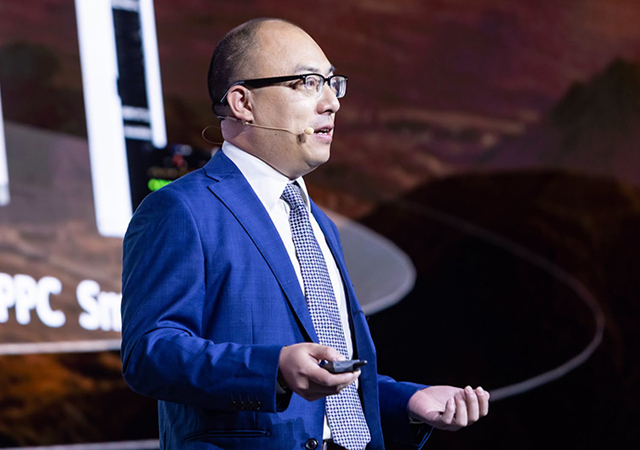
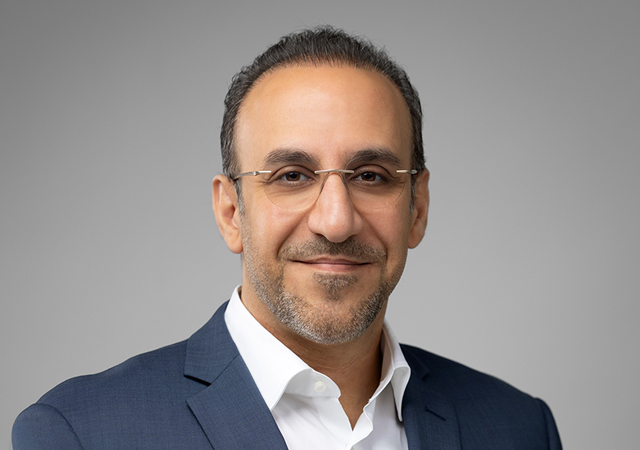
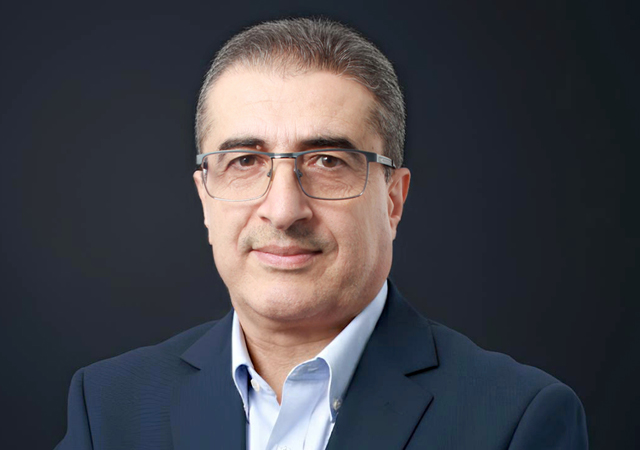
In an exclusive interview with Gulf Construction’s Bina Goveas, Walid Al-Hurani, General Manager of ALUPCO’s Architectural Systems Unit, explains how the unit was conceived, why local engineering agility matters in today’s market, and why developers must look beyond headline price when selecting façade systems.
 cd.jpg)
The ASU’s portfolio comprises different types of curtain-walling, advanced thermal-break systems and large-span sliding solutions.
From profiles supplier to systems house
Although ASU was formally launched in 2020, its foundations were laid over many years. Al-Hurani – who holds a Master’s degree in Architecture from RWTH Aachen University in Germany and has been with ALUPCO since 2002 – led the company’s design and product development department from 2004 to 2020.
“During that period, we designed a lot of systems that we see now,” he explains. “They were developed to support the sales team – for the customers who wanted complete solutions. But at the time, we were only selling the aluminium profiles.”
The pivot came when Al-Hurani championed a new approach: to sell the system in its entirety. Under his leadership, ASU has consolidated design, engineering, and technical support under one umbrella. This integrated approach allows ALUPCO to move up the value chain, offering complete systems – including profiles, accessories, and gaskets – that address the modern building requirements in terms of thermal efficiency, acoustic insulation, and structural integrity, thus providing long-term value for consultants, developers and contractors alike.
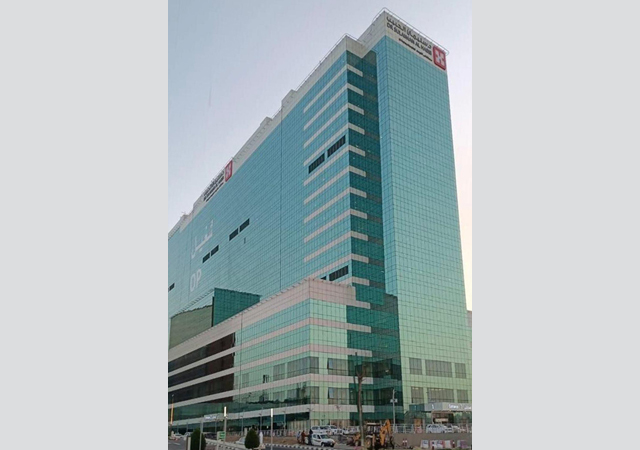
Dr Sulaiman Al-Habib Hospital in Jeddah ... a recently completed project featuring Alupco systems.
Under the ASU model, ALUPCO now engages at a much earlier stage of the project lifecycle. When a project is secured, the team studies the scheme, analyses performance requirements, carries out structural and thermal calculations, prepares material take-offs and cutting lists, and proposes optimised system options for consultants, contractors and fabricators. Thus, ASU delivers engineered envelope solutions with embedded technical intelligence.
“ASU was established to respond to the growing complexity of façade, door and window requirements. As projects became taller, more performance-driven and architecturally ambitious, there was a clear need for a dedicated unit focused on system development, testing and lifecycle performance, rather than only extrusion supply. ASU was created to bring design, engineering, technical support and supply of complete system under one umbrella, aligned with ALUPCO’s long-term strategy of moving up the value chain,” Al-Hurani explains.
Today, the portfolio is heavily performance-driven, comprising different types of high-rise curtain-walling, advanced thermal-break systems and large-span sliding solutions. Increased emphasis on U-values, air- and water-tightness, acoustic insulation and wind-load resistance has driven deeper engineering, optimised profiles and systems solutions suitable for high-rise, housing and mixed-use developments.
ASU’s most popular regional offerings include the 50SG curtain wall system (across structural, semi-structural and slim variants), ALUPCOtherm series, Super Saraya sliding systems, hinged door and window ranges, lift-and-slide systems, and pivot window solutions.
From an owner or developer’s perspective, ALUPCO Architectural Systems offer three core advantages: reliable supply backed by integrated manufacturing, assured performance with a wide range of thermal and non-thermal system options, and strong lifecycle value. These benefits are reinforced by regional sales and technical support across the region, as well as standard Euro-groove compatible designs that provide flexibility in selecting specified accessory brands.
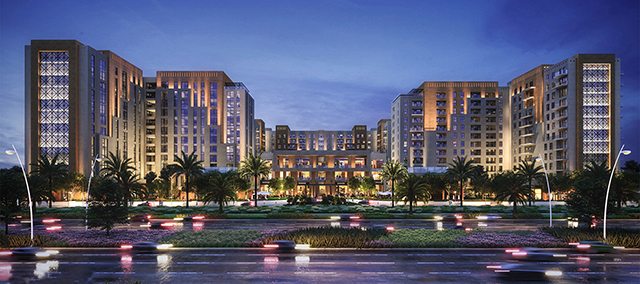
Liwan Project in Riyadh ... among ALUPCO’s ongoing projects.
ASU leverages ALUPCO’s integrated model – controlling extrusion, finishing, design and logistics – to ensure consistent quality and fast delivery of complete systems. Long-term supplier partnerships further safeguard system integrity, reduce dependency risks and enhance responsiveness. Quality underpins its operations, shaping every stage from alloy selection and extrusion to finishing and system testing.
“We take great pride in ALUPCO being the first extrusion company in Saudi Arabia to develop advanced systems such as the 50SG structural glazing and thermal-break systems, while many competitors focused mainly on replicating our systems rather than innovation,” Al-Hurani remarks.
During the construction boom in the UAE, ALUPCO’s 50SG and thermal-break systems captured a significant market share, particularly in high-rise tower projects and other types of buildings, competing with international systems. This led to their widespread adoption across the GCC, as well as in Egypt, Jordan, Syria and several African countries, he adds.
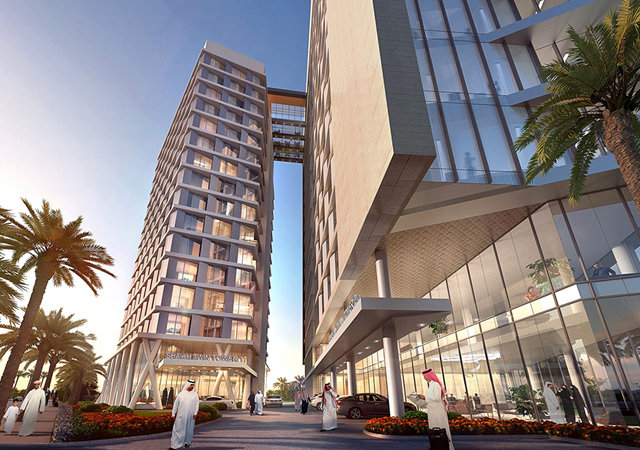
Al Shaikh Tower in Al Khobar ... a new project for ALUPCO.
“ALUPCO systems are among the most specified and in-demand systems in Saudi Arabia and across the region, with approvals from major entities including Saudi Aramco, Royal Commissions, National Housing Company (NHC), ROSHN, other governmental authorities and the private sector as well,” Al-Hurani states.
Similar system concepts were later introduced by some international companies, who were seeking to expand their footprint in the region, highlighting the market recognition and technical competitiveness ALUPCO’s ASU solutions have earned, he points out.
“ALUPCO’s core strength lies in its responsiveness and decision-making efficiency,” Al-Hurani remarks. “When an inquiry is received, we are able to promptly study and provide a compliant solution and coordinate approvals directly with fabricators and consultants. Tooling is ordered without delay, minimising lead times and project risks. In contrast, many international system providers rely on centralised approvals, often causing costly delays.”
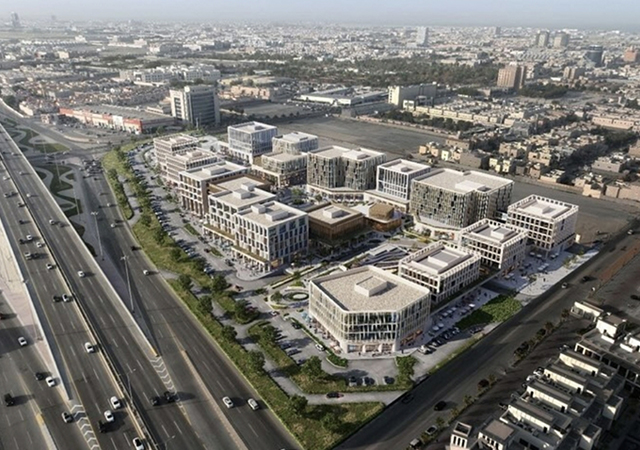
ALUPCO is currently supplying systems for the Remal Business Court in Al Khobar.
Competitive strengths
The GCC façade market has long been influenced by European systems houses, whose continental heritage commands a premium positioning. Al-Hurani is candid in challenging what he sees as an over-reliance on brand origin as a proxy for quality, arguing that the label “international” is applied too loosely in the Arab world.
By contrast, ASU systems are engineered specifically for Saudi Arabia and the region’s climatic conditions – high solar loads, temperature extremes, sand exposure and demanding energy codes – while conforming broadly to recognised EN and ASTM standards through accredited testing.
As far as pricing is concerned, he acknowledges the intense competitive pressure in the market, with many players willing to cut prices to secure volume. ALUPCO’s strategy, however, is not to compete on price alone, but on the strength of its technical depth, the reliability of its vertically integrated supply chain, and the speed of its in-kingdom engineering and production response – positioning the company strongly in complex, high-value projects where execution and performance matter most.
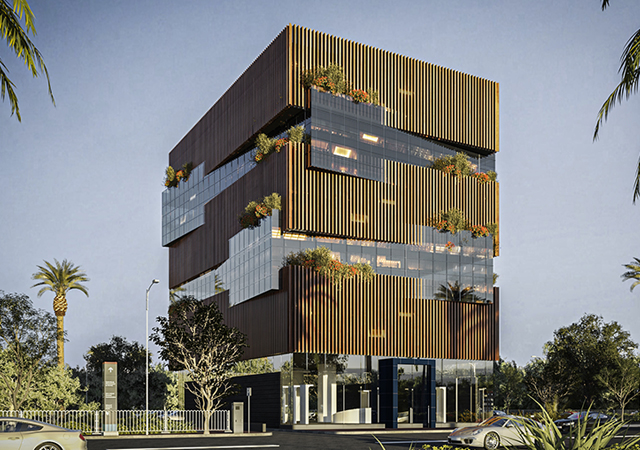
Al-Rajhi Bank Administrative Building ... a key ongoing project in Riyadh.
Vertical integration and regional agility
A key differentiator for ALUPCO is its vertically integrated structure. Unlike conventional systems houses that rely heavily on outsourced extrusion or finishing, ALUPCO controls the production chain, from alloy selection and billet management to extrusion, surface finishing, system engineering and logistics.
This integration enables tighter quality control, finish consistency across large project volumes, and shorter lead times. It also provides a level of supply-chain resilience increasingly valued in a period marked by global logistics volatility.
ALUPCO’s responsiveness and agility is supported with a regional footprint that includes operations in Riyadh, Dammam and Jeddah in Saudi Arabia, an export base in Dubai (UAE) and a presence in Cairo (Egypt). This network allows ASU to combine local production with on-the-ground technical support across key Middle East markets.
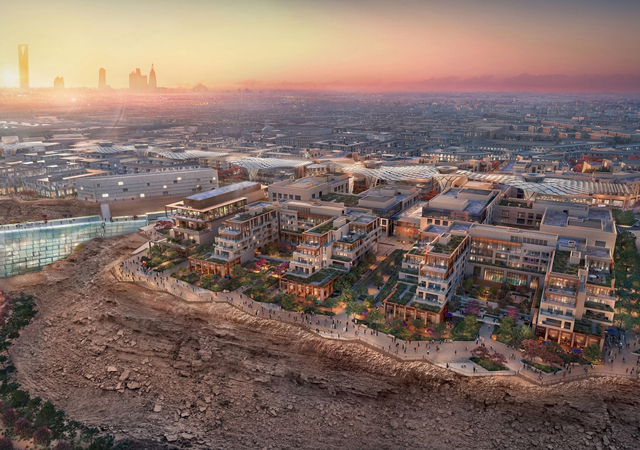
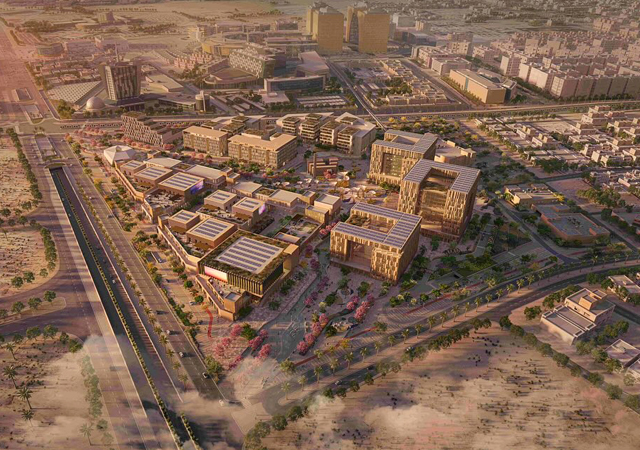
Al-Mishraq Project, Misk City’s central hub ... another prestigious development in Riyadh which will feature ALUPCO’s systems.
Growing project footprint
The market’s response to ASU’s repositioning is reflected in its expanding portfolio. Currently among many projects in the region, in Riyadh, the unit is supplying systems to the Al-Mishraq project at Misk City, Sameem Towers, the Liwan development and the Al-Rajhi Bank Administrative Building. In Al Khobar, projects include Shaikh Tower and Remal Business Court, while in Jeddah, ASU is active on ROSHN’s Al-Arous residential development and Al-Shithri Hotel.
Beyond the kingdom, systems have been deployed for the Cairo Metro in Egypt, King Abdullah Park in Amman (Jordan), residential projects in Syria and a commercial development in Congo as examples.
Product development remains ongoing and Al-Hurani confirms that ASU is working on a new system that should hit the market before the year-end.
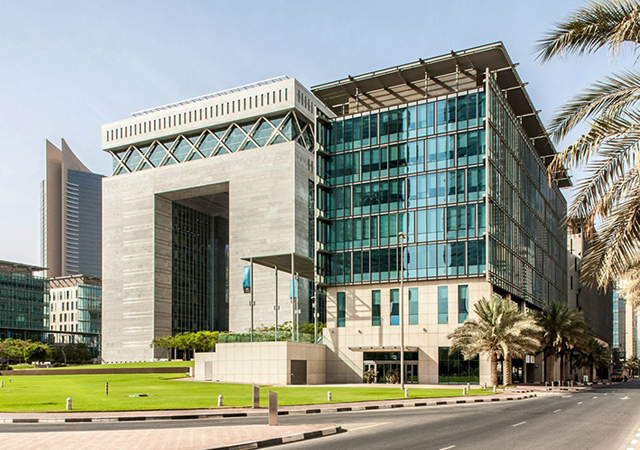
Dubai International Financial Centre (DIFC) ... a landmark development in Dubai.
“A special solution was developed for one project and based on that we are planning to develop a complete system to meet such interestingly increasing demand,” he says, explaining that it combines multiple profiles engineered to achieve a new type of façade solution.
Across its portfolio, ASU offers curtain-wall systems, including structural glazing and semi-structural configurations; thermal-break doors and windows; sliding and lift-and-slide systems, and other high-performance envelope solutions calibrated to different market segments and performance criteria.
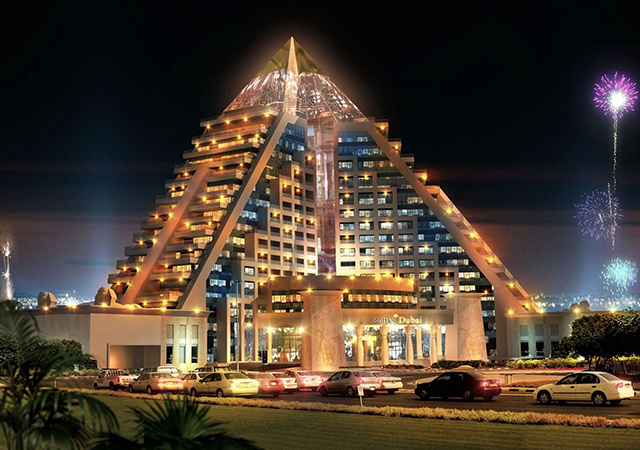
Raffles Tower in Dubai ... fitted with ALUPCO systems.
Execution is key
While engineering and specification are foundational, Al-Hurani identifies fabrication and installation quality as the decisive factor between success and failure. Selecting a specialised contractor is essential to safeguarding a building’s integrity; conversely, poor execution can compromise durability and increase lifecycle costs.
ASU maintains that successful façade delivery requires full integration of engineering, rigorous quality control, and professional installation – a holistic approach that aligns with Saudi Vision 2030’s emphasis on local content, quality and sustainability.
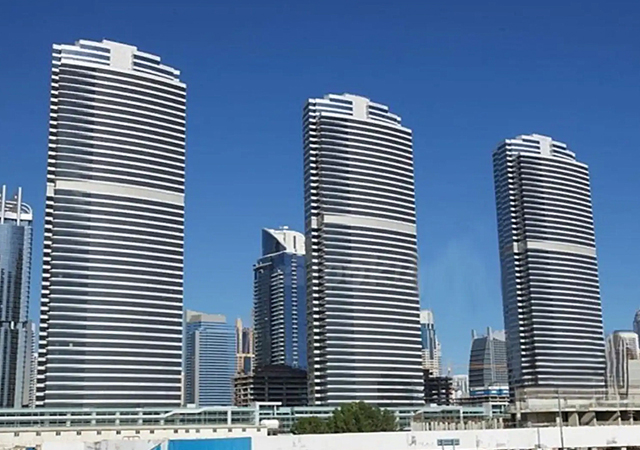
Mazaya Towers ... a landmark complex in Dubai where ALUPCO’s 50SG system has been installed.
Al-Hurani is particularly vocal regarding the risks of “lowest-bidder” procurement: “Unfortunately, some main contractors prioritise awarding aluminium works to the lowest bidders, without giving due consideration to execution expertise or the aluminium systems being used, which ultimately leads to structural problems that can, in some cases, be catastrophic.”
His message to GCC developers, consultants, and contractors is clear: evaluate aluminium systems based on technical merit and regional suitability rather than brand origin or the lowest initial price. “I’ll say this to the contractors and consultants: do not go for the cheapest solution or the cheapest offer. Check the technicality of the system and the competence of the one who will install the system.”
Even the most sophisticated system remains vulnerable to poor fabrication or installation.
“If the envelope of the building is not closed properly, not installed properly, that means there will be water penetration, there will be air infiltration, which will affect negatively the aesthetic of the building … and damage everything else,” he warns.
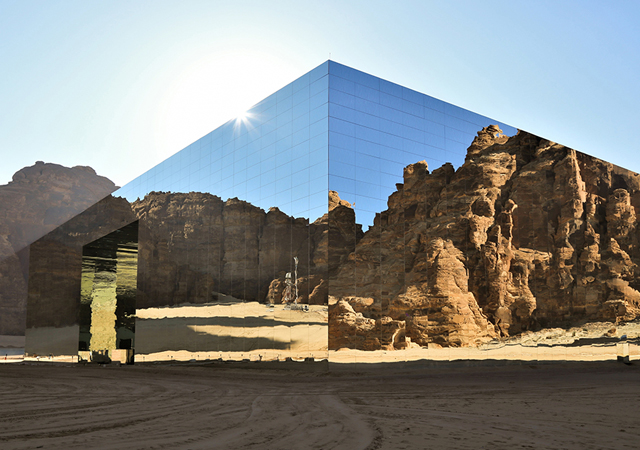
Maraya Project in AlUla ... a striking reference project for ALUPCO.
While the ASU mitigates these risks by recommending experienced fabricators and providing technical support throughout the project lifecycle, Al-Hurani emphasises that commercial pressures must not be allowed to override technical requirements.
ALUPCO’s Architectural Systems Unit aligns with the industrial localisation goals of Saudi Vision 2030. By consolidating the end-to-end value chain within the kingdom, it significantly enhances local content while providing developers with the supply-chain resilience and technical agility required for increasingly complex projects.
By offering a performance-driven, design-focused approach that balances architectural freedom, constructability and long-term durability, ALUPCO’s ASU is positioning itself not just as a supplier, but as a strategic partner in the region’s urban future.