




Dubai is poised to dramatically transform its public transport infrastructure following the the recent go-ahead for the Dubai Metro Gold Line, alongside new study initiatives for a dedicated Airport Express Line. These major capital ventures represent a massive scale-up of the emirate's rail network, solidifying its multimodal transit capabilities and matching the long-term infrastructure mandates of the Dubai 2040 Urban Master Plan.
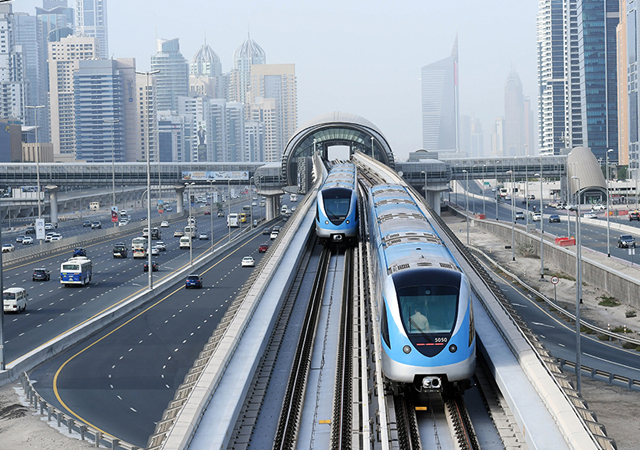
Dubai Metro currently operates a two‑line, high‑capacity urban‑rail network centered on the Red Line and Green Line, with the Route 2020 extension fully integrated into the Red Line. The 90 km rapid‑transit system serves central Dubai and key southern corridors.
Construction work is currently under way on the Blue Line while the Gold Line and Airport Express Line are still in the pipeline.
Gold Line Technical Scope
Described as the largest sustainable transport development in the emirate’s history involving an investment of approximately AED34 billion ($9.26 billion), the Dubai Metro Gold Line project is slated to begin immediate procurement and tendering phases, targeting a formal launch date of September 9, 2032.
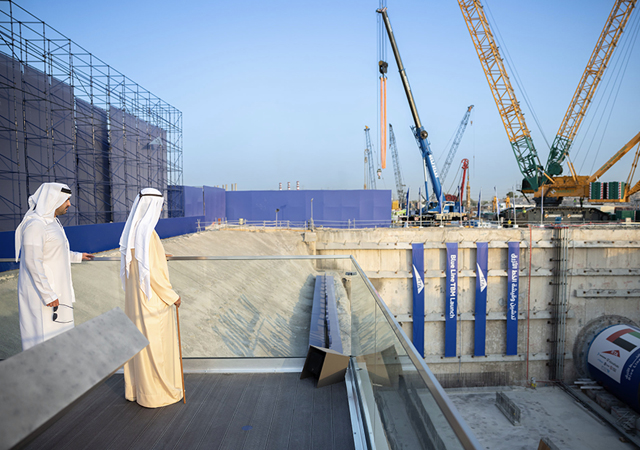
Sheikh Mohammed launches the tunnelling works for the Blue Line project.
HH Sheikh Mohammed bin Rashid Al Maktoum, Vice President and Prime Minister of the UAE and Ruler of Dubai, greenlit the fully-underground route in late April.
Engineering parameters for the Gold Line indicate a highly complex, 42-km subterranean corridor with 18 stations. It will distinguish itself as Dubai's first completely underground metro asset, utilising advanced tunnel-boring technologies to build a tunnel network at depths reaching up to 40 m below ground level. The alignment will cross 15 strategic zones and serve as a transit anchor for 1.5 million people, directly linking 55 major real estate developments currently under construction across the city.
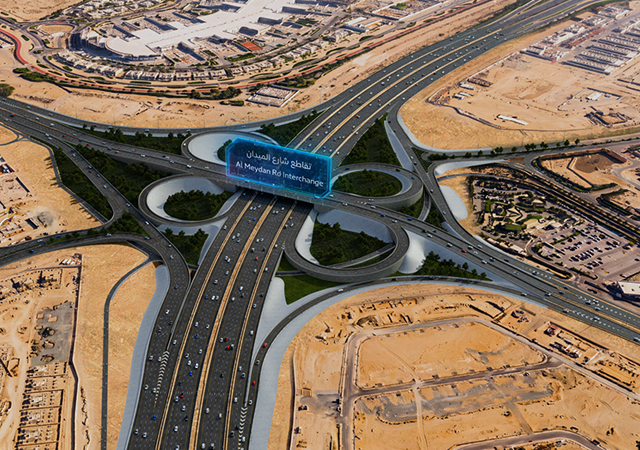
The route originates in the historic district of Al Ghubaiba and snakes through heavy-density urban hubs and major master-planned communities. Key locations along the route include Mina Rashid, Al Satwa, City Walk, Business Bay, Mohammed Bin Rashid City, District 1, Nad Al Sheba, Meydan, Dubai Hills, Global Village, Al Barsha South, and Jumeirah Village Circle, before culminating at Jumeirah Golf Estates.
To maximise network integration, Dubai’s Road and Transport Authority (RTA) has positioned the Gold Line to intersect with existing lines and national heavy rail infrastructure. Interchanges with the Red Line are planned for Business Bay and Jumeirah Golf Estates, while a connection to the Green Line will be established at Al Ghubaiba.
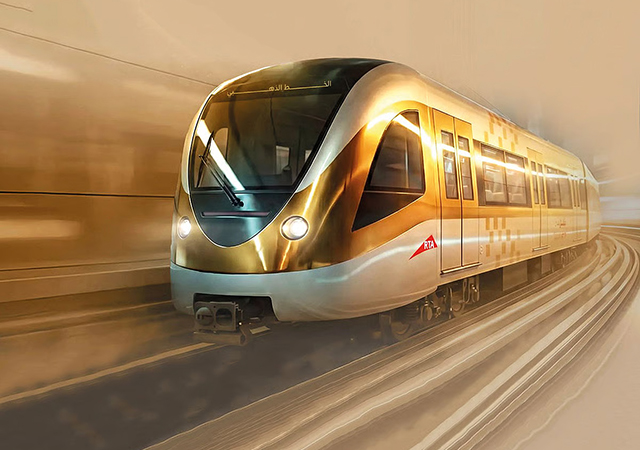
Dubai Metro Gold Line ... 42 km in length.
Crucially, the Gold Line will support multi-modal national travel by integrating with the Etihad Rail passenger network at both Meydan and Jumeirah Golf Estates. This structural layout is projected to handle a daily ridership of 465,000 passengers beyond 2040.
Tenders for the project are expected to be issued this year and contract awards made in 2027, with completion targeted for September 9, 2032, approximately 30 per cent faster than the delivery timeline of the Blue Line.
The implementation of the Gold Line comes as Dubai actively progresses construction on its 30-km Blue Line project, which is scheduled for completion in 2029. Accounting for the current 120-km network inclusive of the Blue Line, the addition of the Gold Line’s 42 km will expand the overall Dubai Metro system to 162 km, marking a 35 per cent increase in total track length. System-wide station density will similarly scale up from 67 to 85 stations.
Airport Express Line
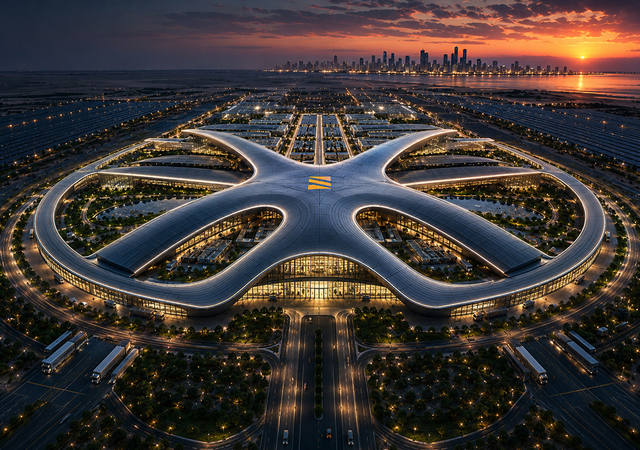
Beyond the Gold Line, the RTA is widening its upcoming rail pipeline by inviting bids from international consultants for the comprehensive study and design of the proposed Airport Express Line. This proposed 55-km rapid transit link is designed to establish a direct connection between Dubai International Airport in Al Garhoud and Al Maktoum International Airport in Jebel Ali, matching the broader phased migration of aviation operations toward DWC.
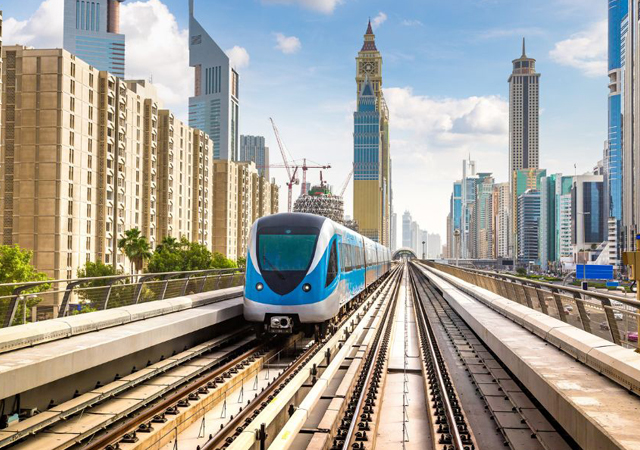
The Dubai Metro will reach an overall length of 162 km with the Blue and Gold Lines.
The Airport Express Line is expected to feature five stations and offer integrated air-passenger logistics, including remote airline check-in desks, baggage drop-off facilities, and dedicated security screening checkpoints. The planned alignment originates at the existing DXB Red Line station, routes through Al Jaddaf, and parallels Al Khail Road down to a new station at JVC before terminating at DWC.
The preliminary design brief also includes two secondary spur lines to broaden catchment areas. One line will branch from the new JVC station to the Al-Fardan Exchange Metro Station at Emirates Golf Club, while a second track will diverge toward Business Bay to feed an additional dedicated station. Design and feasibility consultants have a deadline of June to submit their formal proposals to the RTA.
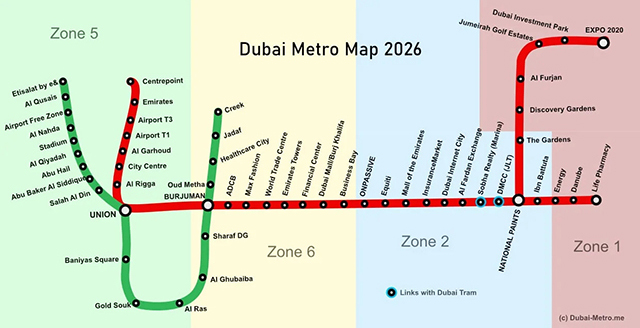
Route 2020 extension modification
Complementing this inter-airport link, active tendering is progressing for the Route 2020 extension modification. This project involves a 3-km link featuring two stations that will run from the current Expo 2020 Metro Station directly into the West Terminal facility at Al Maktoum International Airport, providing immediate, high-capacity access to the expanding aviation and logistics hub.
Blue Line
Work on the Dubai Metro Blue Line began with a ground-breaking ceremony in June 2025.
Early last month (May), HH Sheikh Mohammed launched the primary tunnelling works for the project, which involves an investment of over AED20.5 billion.
The Blue Line project is expected to see 30 per cent completion by the end of 2026 and operations are slated to begin on September 9, 2029.
The route comprises a 15.5-km underground section and 14.5-km stretch above ground. It features 14 stations including three interchange stations, seven elevated stations and four underground stations.
The project will link the Red and Green Lines and connect key residential, economic, and educational districts, serving areas expected to house around one million residents by 2040.
The line will extend in two directions: the first from Creek Interchange Station on the Green Line in Al Jaddaf to Dubai Academic City, and the second from Centrepoint Interchange Station on the Red Line in Al Rashidiya to International City.
The project’s architectural centrepiece will be the Emaar Station, set to become the world’s highest metro station at 74 m, with a capacity for 240,000 passengers per day by 2040. Designed to blend with the urban landscape, it will serve as a landmark symbolising Dubai’s future-focused infrastructure vision.