















































Specialised chemical manufacturer Cortec Corporation is expanding its footprint in the global water infrastructure market, introducing high-performance corrosion inhibitors designed for both large-scale desalination plants and municipal drinking water systems.
The dual-pronged strategy targets the critical "pre-service" and maintenance phases of water infrastructure, where corrosion from seawater, brine, and hydrotesting moisture can compromise structural integrity before facilities reach full operation.
Desalination durability
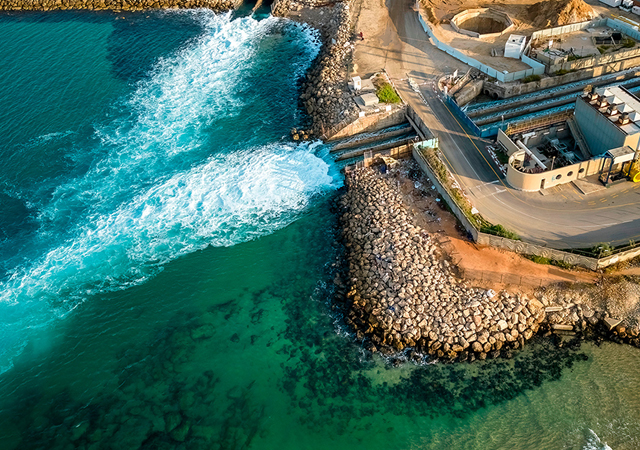
The global desalination market is projected to grow at a compound annual growth rate (CAGR) of 11.6 per cent through 2033, driven by rising demand for potable water in arid regions across the Middle East and Africa. However, these desalination facilities face significant structural challenges due to the high salinity of seawater and brine, which accelerates the corrosion of steel reinforcements within concrete. US-based Cortec says its Migrating Corrosion Inhibitors (MCI) are designed to penetrate concrete pores to form a protective molecular layer on embedded metal, delaying the onset of rust even in the presence of structural cracks.
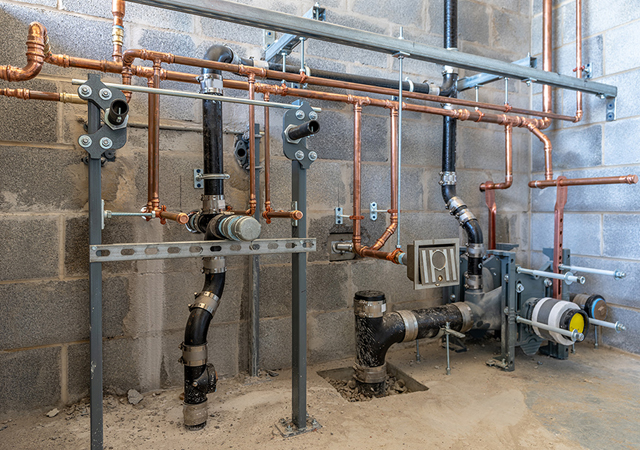
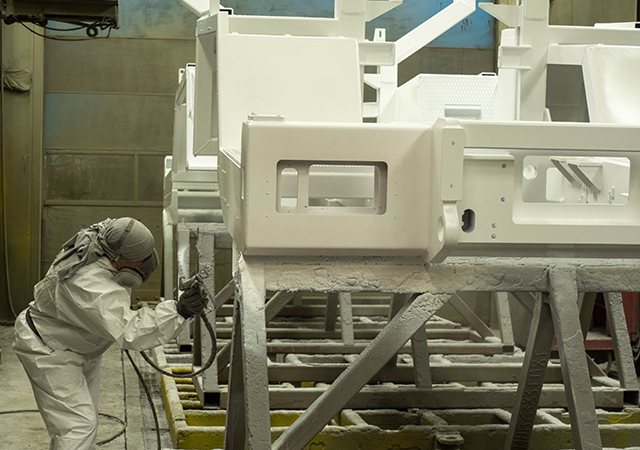
The water used in hydrotesting often leaves behind residual moisture that corrodes pipes.
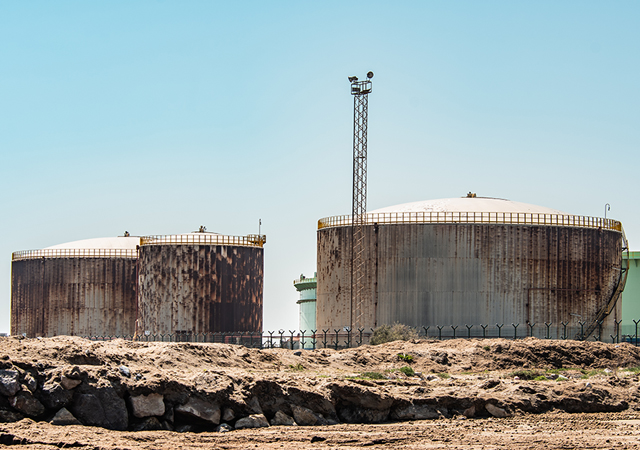
Industry analysts note that while new projects are breaking ground especially in the Middle East and Africa, many facilities built over the last two decades are now entering intensive maintenance phases, increasing the demand for retrofitted protection. In either case, the corrosiveness of seawater (average 3.5 per cent salinity) and even higher salinity brine water is a constant threat to infrastructure longevity.
Cortec says its MCIs are an excellent addition to desalination plant concrete because of their ability to delay time to corrosion initiation and reduce corrosion rates once started. Applied as an admixture or surface treatment, MCI chemistry works its way through concrete pores to form a protective molecular layer on the surface of embedded reinforcing metal, guarding against interaction with corrosive elements such as chlorides and moisture. This protective layer continues to function even in the presence of cracks that inevitably form as concrete ages.
Unlike traditional calcium nitrite admixtures, Cortec claims its MCI chemistry does not alter the physical properties of the concrete, simplifying application for contractors. For the public works sector, several of the company's products have secured ANSI/NSF Standard 61 certification, a requirement for materials used in potable water structures.
MCI in action at desalination plants
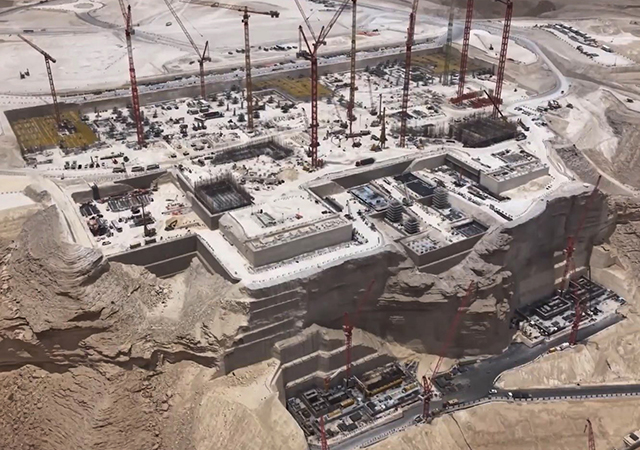
The company highlighted the long-term application of its technology in major international projects. A large desalination project in the Middle East (2010-2013) used MCI in concrete fixtures at various stages of the desalination process. Large precast concrete intake pipes transporting seawater to the desalination plant were treated with MCI-2005 and crystalline water-proofing admixtures. The same two admixtures were used in pretreatment sand filtration bins and brine water reservoirs. To make up for application errors in some of the desalinated water reservoirs where the concrete cover was too thin, MCI-2020 was applied to reservoir walls and columns after construction.
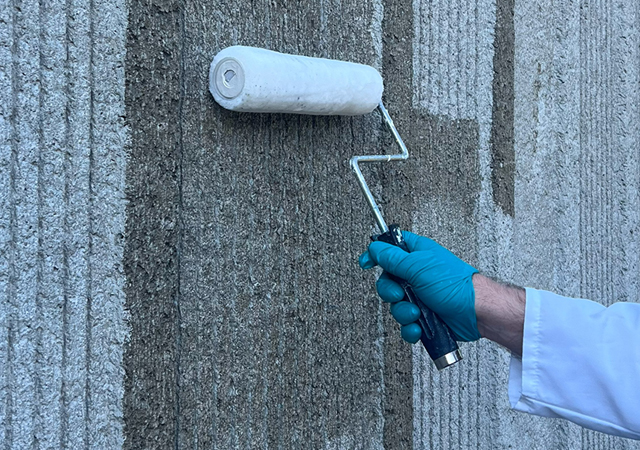
MCI-2018 X V/O ... designed to protect vertical and overhead concrete.
Another example cited by Cortec was a desalination plant built in Europe in 2003 to serve two million people. As brine salinity levels are double those of standard seawater, MCI-2020 (a surface-applied corrosion inhibitor) was used to protect the reinforced concrete chest at the beginning of the brine discharge channel; MCI-2005 was admixed into the reinforced concrete chest at the end of the discharge channel.
MCI has also been used in a variety of concrete water tower repairs over the years, indicating the versatility of this corrosion fighting solution at any stage of a structure’s service life.
Hydrotesting protection
Simultaneously, Cortec is addressing a vulnerability in domestic and commercial plumbing: the hydrotesting phase. While essential for leak detection, the water used in testing often leaves behind residual moisture that corrodes pipes and storage tanks before commissioning.
The company’s VpCI-649 HP, which received NSF certification in 2023, provides a phosphate-free solution for contractors. The inhibitor protects steel, copper, and aluminium without the use of nitrites or chromates, allowing for the safe testing of potable water systems during construction waiting periods.
Vertical concrete protection
Meanwhile Cortec has also launched a new 100 per cent silane water repellent with anti-sag properties for concrete maintenance. Its new MCI-2018 X V/O is designed to make it easier for contractors to protect vertical and overhead concrete from the ingress of water and chlorides, minimising drips and maximising water-repellent penetration into bridges, parking ramps, and other concrete structures with walls and overhangs.
Ashraf Hasania, Technical Sales and Product Manager, points out why this new formulation is so important: “MCI-2018 X V/O provides a unique and highly effective solution for protecting vertical and overhead concrete surfaces - areas that are often under-protected in structures like parking garages and industrial facilities, where most attention is typically given to horizontal slabs. Designed for ease of application, MCI-2018 X V/O efficiently covers those surfaces while minimising material waste caused by runoff and dripping.”
MCI-2018 X V/O can be used as a standalone 100 per cent silane water repellent or in tandem with a surface-applied corrosion inhibitor (SACI) such as MCI-2020. This combination allows contractors to apply the highest possible concentration of SACI and prolong the corrosion inhibitor protection period by lining the concrete matrix with a hydrophobic layer that maintains breathability.
Hasania adds: “As a complementary system, MCI-2018 X V/O works seamlessly alongside other water repellents, sealers and membranes used on horizontal surfaces, creating a more thorough protection system. The result is a balanced, cost-effective approach that enhances durability performance, reduces maintenance needs, and delivers long-term protection.”
MCI-2018 X V/O is easy to apply using conventional spray equipment, he says, and is an excellent choice for repairs or routine maintenance on vertical or overhead concrete found in many structures such as bridges, tunnels, parking garages, jetties/piers (non-submerged), and commercial buildings.
With this thixotropic water repellent, contractors are now equipped to protect vulnerable concrete surfaces that were previously difficult to address.