































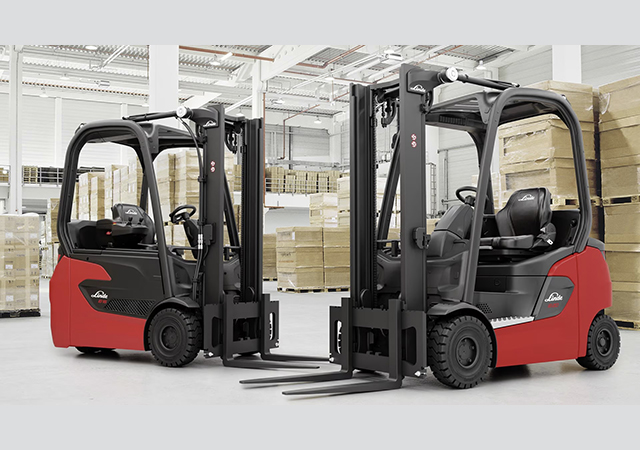
Linde Material Handling, a global leader in the production of forklift trucks and warehouse equipment, has expanded its electric counterbalance portfolio with the launch of the Linde Ei series, a new range of three- and four-wheeled forklifts featuring permanently integrated lithium-ion batteries.
Available with load capacities ranging from 1.4 to 2.0 tons, these models leverage an innovative energy concept to provide significant improvements in operator comfort and safety compared to traditional replaceable battery systems, the company says.
The integration of the lithium-ion battery has allowed design engineers to reimagine the cabin layout entirely. By eliminating the bulky traditional battery compartment, Linde has increased driver legroom by 35 per cent, a figure that significantly surpasses the industry average. This extra space facilitates a more relaxed seating position, which is essential for maintaining driver motivation and long-term health throughout a shift.
Accessibility is further enhanced by an industry-leading entry step situated just 40 cm above the ground. This low and wide design is particularly beneficial for operators in the 1.4 to 2.0-ton payload class who must frequently mount and dismount the vehicle to perform various logistical tasks.
“This low yet wide entry design leads the entire vehicle class,” says Richard Bozem, Senior Strategy and Portfolio Manager at Linde Material Handling. “The design provides exceptional comfort in daily use, and it enhances safety as well. Beyond that it is especially advantageous in this payload class, where drivers frequently leave their vehicle to perform other logistical tasks.”
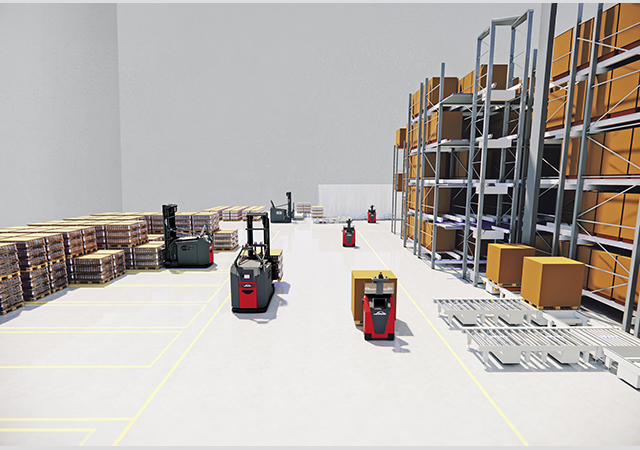
The new Linde I-MATIC core series of highly customisable AGVs for specialised industrial tasks ... showcased at LogiMAT.
The new Ei14 – Ei20 electric forklifts are designed for light to medium-duty applications in single- or two-shift operations at temperatures as low as minus 20 degrees Celsius.
This makes the Linde Ei models a cost-effective yet highly ergonomic alternative for companies that have previously used electric forklifts with lead-acid batteries for their intralogistics material flow operations, said the company. Unlike lead-acid batteries, which require overnight charging, forklifts equipped with (integrated) lithium-ion batteries can be recharged during operation, such as during breaks.
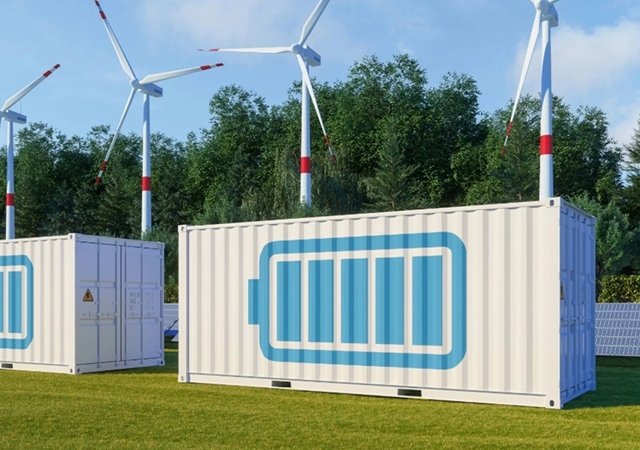
Lithium-ion batteries are maintenance-free and do not release battery gases during charging, eliminating the need for a separate, ventilated charging room. This frees up space that can be used for other purposes. The need for constant monitoring of the battery acid level and topping off water is eliminated as well. The optional onboard charger further increases operational flexibility, as it can be used with any standard outlet.
Ergonomics reimagined
The major advantage of the integrated lithium-ion battery is the additional cabin space it provides. Eliminating the traditional battery compartment has increased the driver’s legroom significantly surpassing the industry average.
High-level performance
Similar to the Linde E14 – E20 electric forklifts with replaceable batteries, models with integrated batteries feature a 48-volt drive system and maintenance-free asynchronous motors.
“This provides sufficient power for their full range of tasks. Thanks to swivel steering on the three-wheeled version or the Linde combi steering axle on the four-wheeled version and their compact dimensions, these forklifts achieve high handling performance, even in tight spaces,” Bozem states.
Safety first
As with all Linde vehicles, the safety features of these models represent a key part of the brand’s DNA. The slim mast design offers excellent all-around visibility, while integrated standard assistance systems provide additional stability, Linde states. For example, the Linde Curve Assist automatically adjusts driving speed in curves based on the steering angle, while the Linde Load Assist uses pressure sensors and a lifting height indicator to control tilting, lifting, and travelling functions to prevent tipping accidents. Optional assistance systems such as the Linde Speed Assist (automatic speed adjustment when entering warehouses), Linde Safety Pilot (load monitoring) and Linde Safety Guard (warning zones) provide additional safety, it adds.
Fully connected upon request
As part of the latest Linde 12XX generation, the Ei series is fully digitally integrated. The forklifts feature a sophisticated electronic architecture and comprehensive sensor technology that allows for advanced fleet management. When equipped with an optional data transmission unit, operators can wirelessly track operating hours and error codes, while the manufacturer can provide system updates and activate new vehicle functions via over-the-air software deployments. This combination of ergonomic design and smart technology ensures the Linde Ei series is well-equipped for the evolving demands of modern intralogistics.
Meanwhile at LogiMAT, an intralogistics solutions and process management exhibition held in Germany in March, Linde Material Handling introduced the new Linde I-MATIC core series of highly customisable automated guided vehicles (AGVs) for specialised industrial tasks.
These AGVs are available with various attachments, such as single double forks or paper clamps, and can move heavy loads of up to 4.0 tons to lifting heights of up to 6.7 m.
A headline live demo featured “Carl,” a humanoid robot that used embodied AI to perform ergonomic picking tasks autonomously. Linde framed the humanoid as a glimpse of future order‑picking capability, noting the project remained in early development within the KION Group, which it is part of, and would take a few years to reach market readiness. The company contrasted this with the more mature Linde RoCAP, an AGV carrying an intelligent robotic arm that already uses AI to recognise and pick packages.