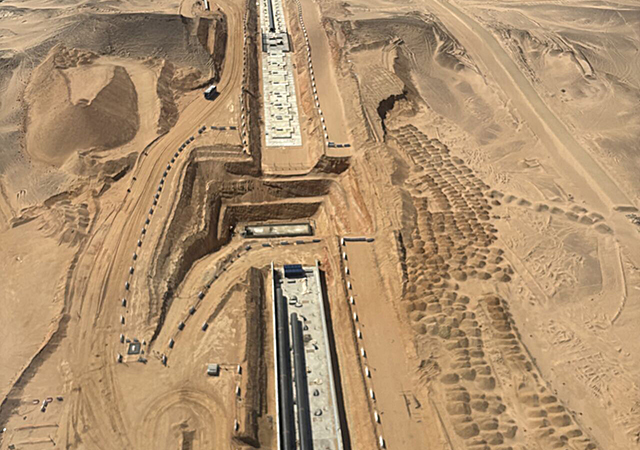
















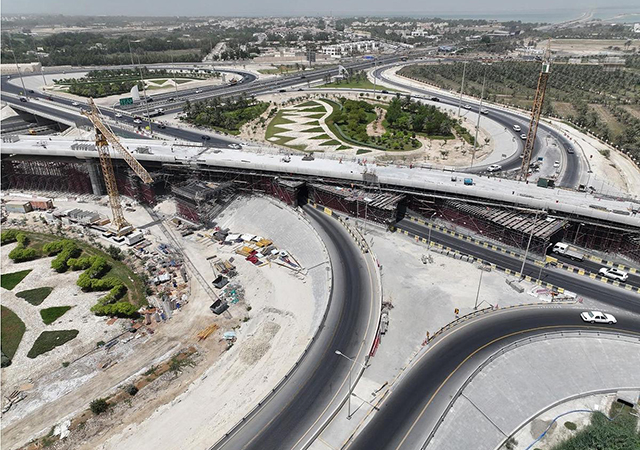











The Royal Commission for Riyadh City (RCRC) has commenced work on the Othman Bin Affan Road and King Salman Road development project, which aims to improve traffic flow and enhance the overall mobility experience across the Saudi capital.
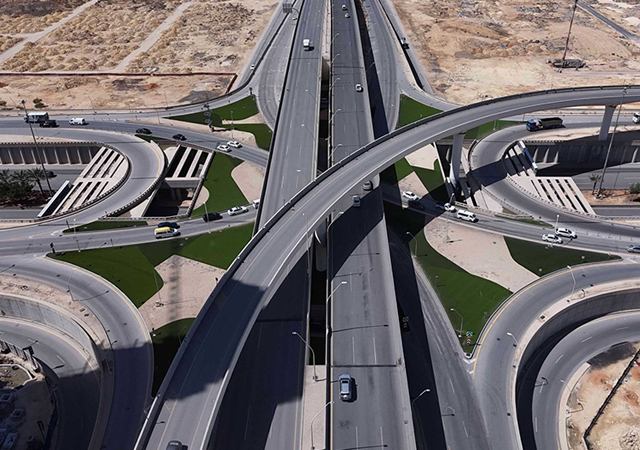
Spanning 4.3 km, the project includes the construction of seven new bridges alongside upgrades to existing road lanes. These enhancements will increase the capacity of the corridor to accommodate approximately 500,000 vehicles per day, further strengthening connectivity between key routes in northern Riyadh, RCRC said.
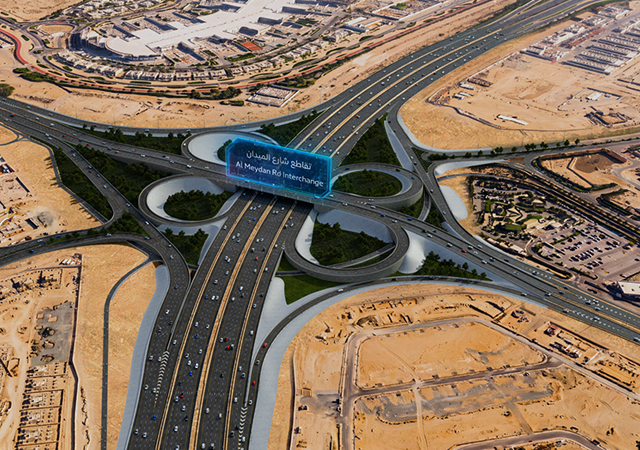
The scope of work involves upgrading major intersections at King Salman Road and Anas bin Malik Road through an integrated network of bridges ranging from two to four lanes. This will significantly enhance connectivity between the northern and southern sections of King Salman Road, reduce travel times, and improve overall traffic efficiency within the area.
RCRC has also introduced a temporary traffic diversion on the northern segment of the road, as part of a broader traffic management plan carried out in coordination with the relevant authorities to maintain safe and smooth traffic flow during the construction period.
Among other road projects in the capital, the RCRC has announced significant progress on the Taif Road extension project, which is now 65 per cent completed. The project is a key component of the first batch of the Main and Ring Road Axes Development Program, launched by RCRC at a total investment of SAR13 billion ($3.4 billion).
Spanning 9.7 km from the Laban neighbourhood to the Qiddiya project, the road serves as a major arterial route to accommodate the city’s rapid growth, said RCRC in a statement. It features four main lanes and is designed to handle traffic volumes of up to 440,000 vehicles per day, it added.
A standout feature of the project is the “Wadi Bridge,” a landmark structure spanning 500 m in length and 47 m in width, serving as a defining engineering element of the development, said RCRC.
Upon completion, the project will create a direct and seamless link between residential neighborhoods and major development destinations, most notably Qiddiya City.
Meanwhile, Riyadh Municipality has announced that it has begun engineering upgrades at key intersections in the western and southern parts of the Saudi capital, as part of efforts to improve traffic flow and develop the road network.
The works cover the junction of Ali bin Shiban Street and Sufyan bin Al-Hakam Street in the Al Awali district, and the intersection of Ibn Majah Road and Jabal Al-Rahmah Street in Al-Sulay, said a statement from Riyadh Region Municipality.
These improvements are intended to enhance intersection performance, streamline traffic movement and strengthen links between local roads and main corridors, while improving road safety, it stated.
The project also aims to ease daily commutes for residents in surrounding neighborhoods.