













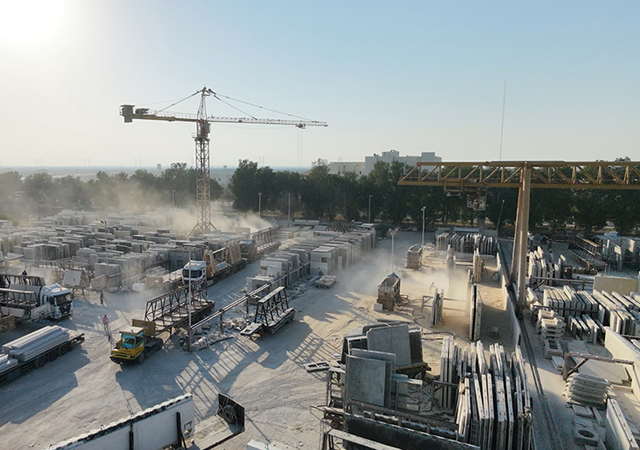
When Qanbar Dywidag Company (QDC) was founded in 1981 as a partnership between Al Ansari Holding Company and Germany’s Dywidag, precast was a novelty in Saudi Arabia. Today, as the kingdom shifts towards industrialised and modular construction, it is the method of choice for giga-developers, and the pioneer precast systems and solutions provider is building capacity to match.
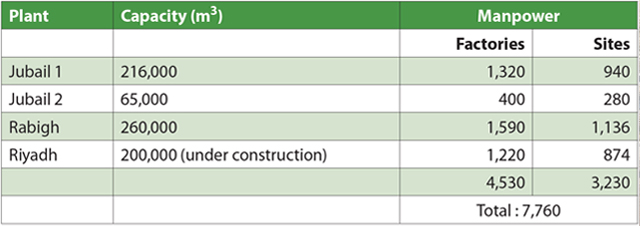
Its three operational plants produce around 541,000 cu m a year, and a fourth, under construction in Riyadh, will take the total to 741,000 cu m.
In an exclusive interview, CEO Khalid Abu Shousha tells Gulf Construction about the company’s market position, capacity expansion plans, sustainability initiatives and role in the kingdom’s giga-project pipeline.
“QDC is a leading precast concrete company in Saudi Arabia, with more than 44 years of experience in the design, manufacture and installation of precast and prestressed concrete solutions,” says Abu Shousha, attributing the company’s enduring market position to an integrated capability spanning the full project lifecycle from engineering and design through manufacturing, delivery and installation.
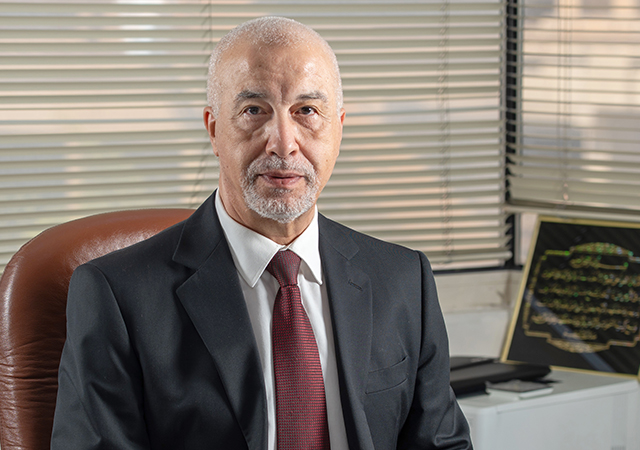
‘QDC is a leading precast concrete company in Saudi Arabia, with more than 44 years of experience in the design, manufacture and installation of precast and prestressed concrete solutions’ – Khalid Abu Shousha
This approach is particularly valuable for complex and fast-track projects, where close coordination between design, production, logistics and installation is essential, he points out.
This end-to-end model, he explains, is underpinned by highly experienced engineers, technicians and trained personnel, strong project planning and feasibility capabilities, rigorous quality control, advanced materials and manufacturing processes, and the agility to adapt to shifting market requirements and regulations.
“This combination of technical expertise, manufacturing capacity, project execution capability and market adaptability has enabled QDC to maintain a strong and sustainable position in the Saudi precast concrete sector,” he notes.
Expanding production footprint
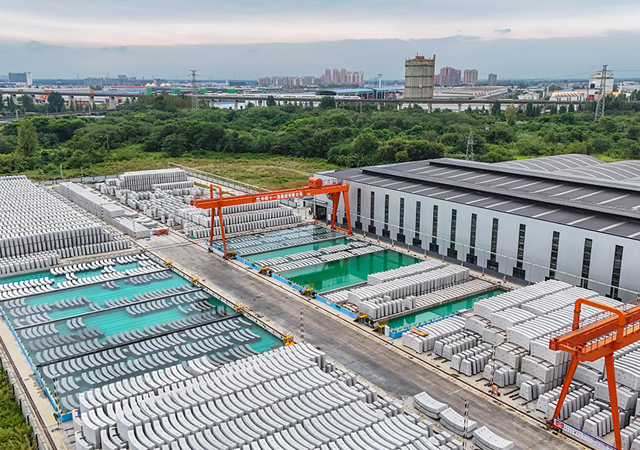
QDC has four manufacturing facilities, one of which is under construction. The three operational plants have a combined annual production capacity of approximately 541,000 cu m, supported by a workforce of some 5,666 employees across factories and sites. The plants are strategically distributed to serve the kingdom’s key regions.
Rabigh is the largest, with a capacity of 260,000 cu m, followed by Jubail 1 at 216,000 cu m and Jubail 2 at 65,000 cu m. The fourth plant, currently under construction in Riyadh, will add a further 200,000 cu m to QDC’s capacity.
QDC has already broken ground on its new Riyadh manufacturing facility – Al-Kharj factory – which is a strategic move to strengthen production capacity in the capital and meet rising demand for precast solutions nationwide, Abu Shousha remarks.
Rabigh has the largest workforce (2,726: 1,590 in the factory and 1,136 on site), followed by Jubail 1 (2,260: 1,320 and 940) and Jubail 2, the smallest plant, which has 680 (400 and 280). The Riyadh facility is expected to employ 2,094 including 1,220 in the factory and 874 on site.
“These facilities provide QDC with a geographically diversified manufacturing footprint capable of supporting projects across key regions of the kingdom,” Abu Shousha says.
The company is not standing still. Investment continues across automation and operational efficiency, including in the new Riyadh facility designed to produce approximately 700 cu m per day of precast elements (200,000 cu m annually), using updated production methodologies; expansion of the Rabigh plant with two new production lines and additional equipment; enlargement of the Rabigh stockyard; fully automated reinforcement-steel processing equipment; and continuous upgrades to material handling and stocking systems.
“These investments are intended to enhance productivity, quality, operational efficiency and delivery reliability,” he adds.
Where demand is strongest
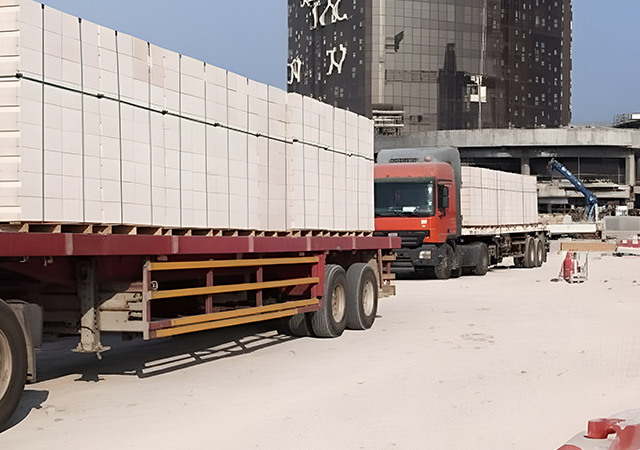
QDC manufactures a wide range of structural and architectural solutions – from hollow-core slabs and pre-stressed beams to architectural cladding.
The strongest current demand for its products comes from the housing and residential sector, particularly in Riyadh, Makkah and Madinah, he says.
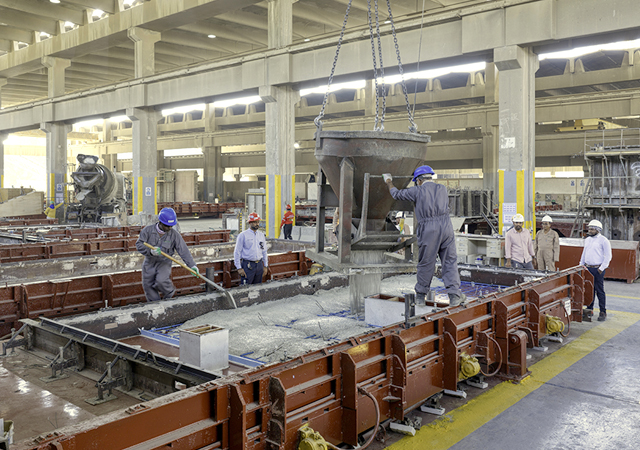
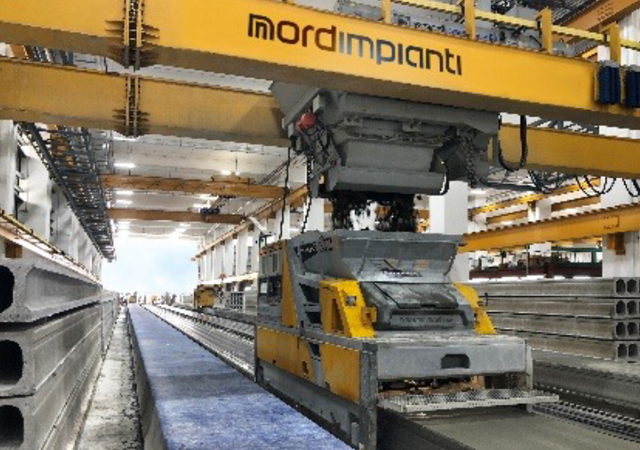
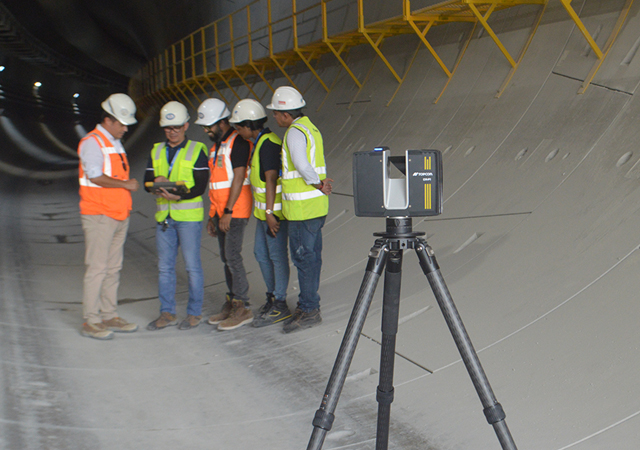
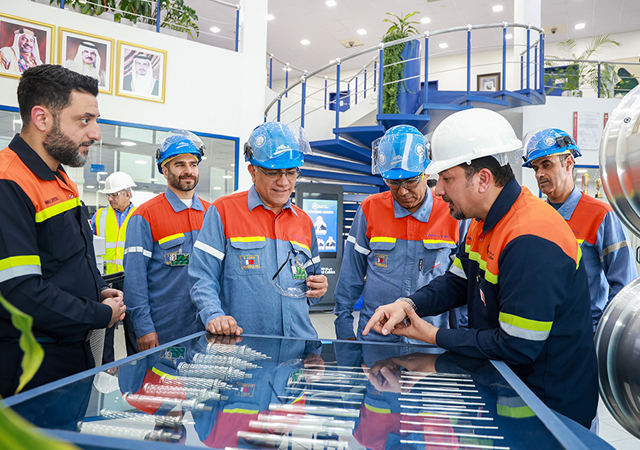
QDC’s end-to-end model is underpinned by highly experienced engineers, technicians and trained personnel.
“Looking ahead, we see significant growth potential in the energy sector, including oil and gas, electricity infrastructure and wind energy developments. These sectors are expected to create increasing opportunities for advanced precast and prestressed concrete solutions,” he says.
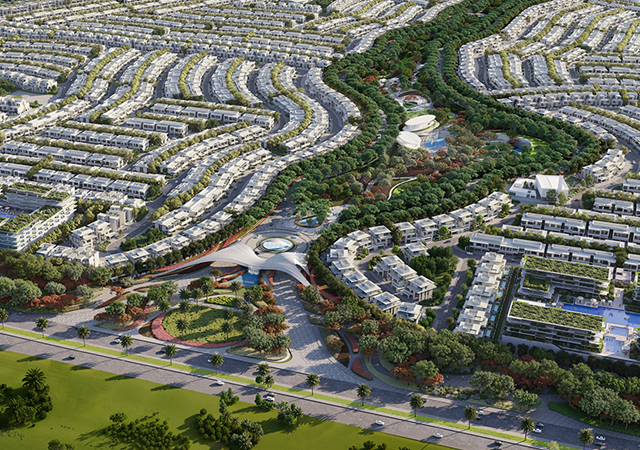
On the client side, the residential pipeline is dominated by giga-developers such as ROSHN and National Housing Company (NHC), whose large-scale housing programmes play directly to QDC’s manufacturing strengths.
“The scale and repetitive nature of these developments provide significant opportunities to leverage QDC’s engineering, manufacturing and project execution capabilities,” he says.
Integration, BIM and industrialised construction
QDC’s ability to combine engineering, design, manufacturing, delivery and installation under coordinated management is, in Abu Shousha’s view, central to its competitive edge, particularly on complex, fast-track schemes where tight coordination between design, production, logistics and installation is critical.
Digital tools are playing an increasing role in this coordination. Building Information Modelling (BIM) is now a standard requirement on major Saudi developments, and QDC applies it to strengthen drawing coordination, accuracy, constructability and quality control, which is particularly valuable on large, complex projects where digital models help manage interfaces before problems reach the factory floor or site.
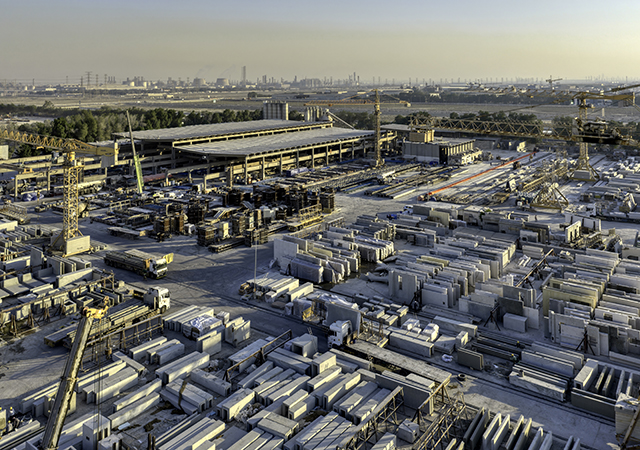
QDC manufactures a wide range of structural and architectural solutions, from hollow-core slabs to architectural cladding.
More broadly, Abu Shousha notes that the kingdom is shifting from conventional construction to industrialised and modular methods, driven by demand for efficiency, standardisation and faster delivery. This trend, he says, presents a direct opportunity for QDC, whose manufacturing strengths, engineering expertise and production capacity suit large-scale, repetitive construction programmes.
Advancing sustainable concrete
Sustainability and the reduction of concrete-related carbon emissions have become key areas of QDC’s development strategy. Over the past five years, QDC has been actively expanding its low-carbon concrete initiatives by adopting innovative mix-design technologies and utilising locally available supplementary cementitious materials (SCMs), including natural pozzolan, to reduce the carbon footprint associated with cement and concrete production. QDC has also explored technologies such as CarbonCure as part of its ongoing efforts to develop more sustainable concrete solutions.
In 2025, approximately 29.8 per cent of QDC’s total concrete production was associated with green concrete initiatives. QDC continues to evaluate and expand low-carbon mix designs and other sustainable concrete technologies in response to evolving market requirements and in support of the kingdom’s broader sustainability and decarbonisation objectives.
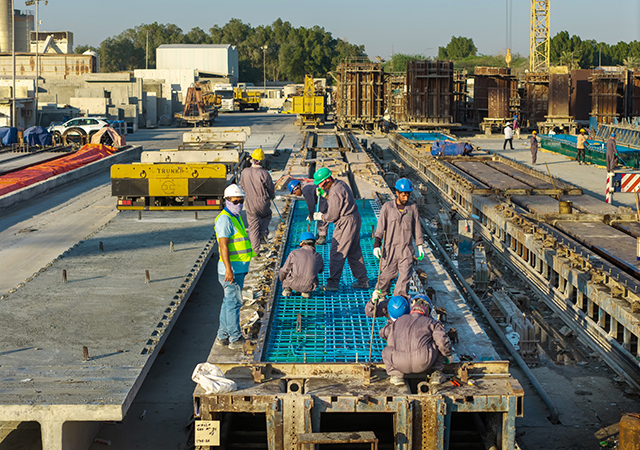
QDC’s ability to combine engineering, design, manufacturing, delivery and installation under coordinated management is central to its competitive edge.
With regard to energy-efficient insulated precast systems, 100 per cent of the external sandwich panels produced at QDC’s plants are insulated for both residential and industrial applications, in accordance with applicable SASO requirements. These insulated precast sandwich panels provide enhanced thermal performance and can contribute to reducing building cooling energy consumption.
“Depending on the insulation type, thickness, building design, climate, and overall envelope performance, insulated precast walls can typically achieve approximately a 30 to 45 per cent reduction in cooling energy consumption compared with non-insulated concrete walls, when designed and installed in compliance with the applicable Saudi Building Code (SBC 601) and SASO thermal insulation requirements,” he points out.
Through these initiatives, QDC is integrating sustainability into its manufacturing ecosystem by combining lower-carbon concrete technologies, locally sourced SCMs, and high-performance insulated precast systems, while continuing to assess additional opportunities such as recycled aggregates and other circular-economy solutions as technically and commercially viable.
Quality assurance from design to handover
QA/QC is embedded across the entire project lifecycle, Abu Shousha says. At the design stage, technical reviews accompany every step from initial drawings through client approval, including design calculations and multidisciplinary engineering checks. During manufacturing, inspection covers raw material receipt, mould preparation, reinforcement and embedment checks, concrete placement, demoulding, curing, storage and final inspection prior to delivery. On-site, QDC applies controls covering material receipt, installation, alignment, grouting and final inspection, with snagging tracked and closed out before handover.
“This systematic approach ensures that quality and traceability are maintained from engineering and manufacturing through installation and final handover,” Abu Shousha says.
Track record on landmark projects
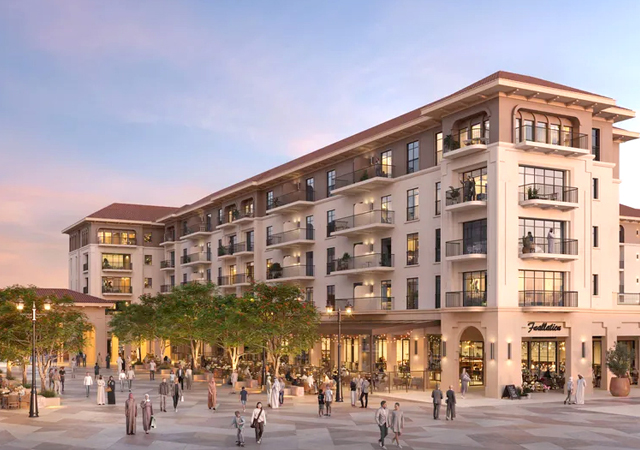
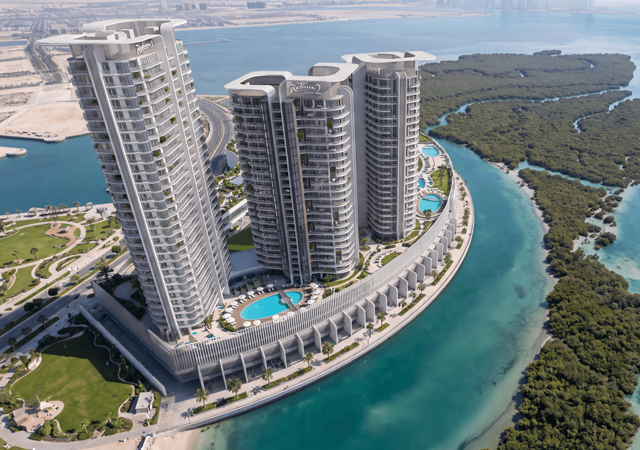
QDC’s client roster reads like a who’s who of Saudi industry and government including Saudi Aramco, SABIC, the Royal Commission for Jubail and Yanbu, and numerous government entities. Its project portfolio spans stadium developments, Red Sea Global resort projects, Saudi Aramco industrial facilities, and major housing developments in Jeddah and Riyadh – work that, in Abu Shousha’s words, “reflects QDC’s ability to manage demanding technical requirements, large production volumes, complex engineering interfaces and accelerated delivery programmes.”
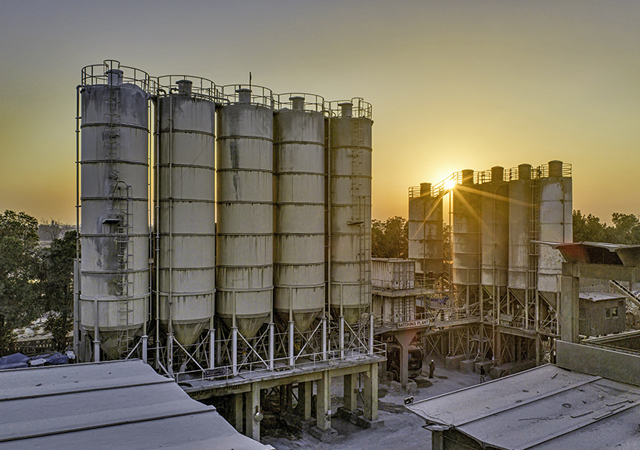
Quality control is maintained right from material receipt to final installation.
The company’s contribution to giga-projects such as ROSHN, NHC and the Red Sea development is also reshaping its own operations: the scale and standardisation inherent in these programmes are driving QDC to optimise engineering, production planning, manufacturing processes and quality control, even as project scale demands ever-tighter coordination and programme management.
Powering the housing push
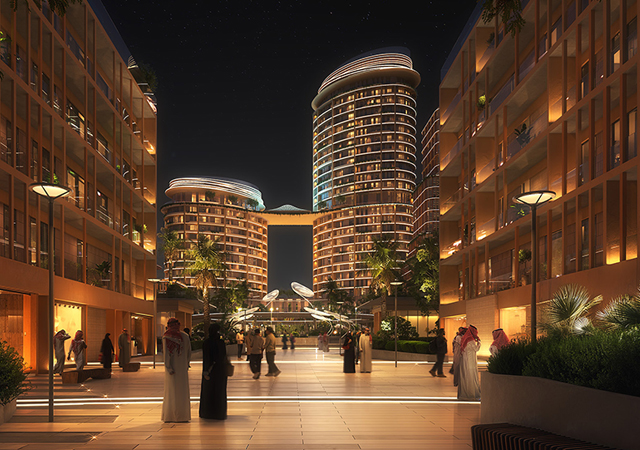
With national demand for residential development running into hundreds of thousands of units, QDC is playing a central role in delivering large-scale housing across the Eastern, Western and Riyadh regions. With its three established plants, and the new Riyadh facility adding further capacity, QDC is well placed to support high-volume housing programmes at pace.
Looking ahead
QDC’s expansion strategy is squarely aligned with the opportunities created by Saudi Vision 2030, the kingdom’s giga-projects, residential developments and national infrastructure targets.
“Our current production capabilities, together with the expansion of the Riyadh facility and QDC’s continuing investment in automation, production efficiency, sustainable concrete technologies and engineering capabilities, will strengthen our ability to serve key markets and support major projects across the kingdom,” Abu Shousha says.
“Our objective is to combine increased manufacturing capacity with technical innovation, sustainability and operational excellence, enabling QDC to support the kingdom’s ambitious construction programme and upcoming developments, including opportunities associated with the 2034 FIFA World Cup,” he concludes.
With a growing manufacturing footprint, a deepening commitment to low-carbon concrete, and a project portfolio that spans housing, energy, sport and tourism developments, QDC looks well positioned to remain one of the defining names in Saudi Arabia’s precast concrete industry for the next chapter of the kingdom’s transformation.