










































The UAE is moving to hard‑wire logistics into its construction and infrastructure strategy, with federal officials pushing a more integrated national ecosystem while Dubai Customs is working directly with traders, airlines and ports to ease bottlenecks in the movement of building materials.
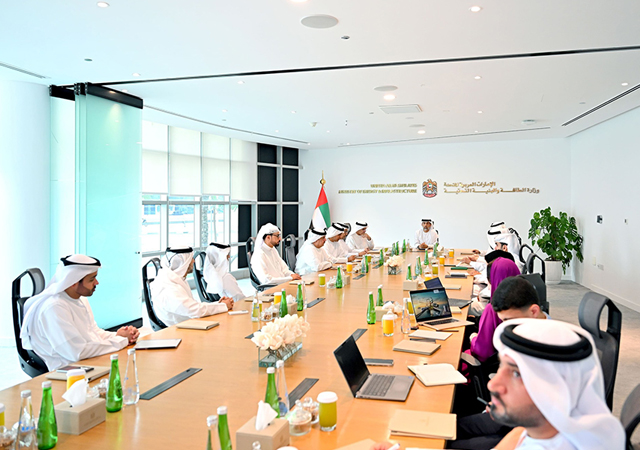
At a July 16 meeting of the UAE Logistics Integration Council, Minister of Energy and Infrastructure Suhail Al Mazrouei reaffirmed the country’s aim to cement its position as a global trade and logistics hub through “world‑class infrastructure, accelerated digital transformation, and effective strategic partnerships” aligned with the We the UAE 2031 agenda.
The council reviewed progress on a national logistics performance framework, air cargo targets, initiatives to better integrate trade and logistics systems, the planned National Early Enquiry Centre, and efforts to modernise postal services – all designed to lift supply chain efficiency and resilience in step with international best practice.
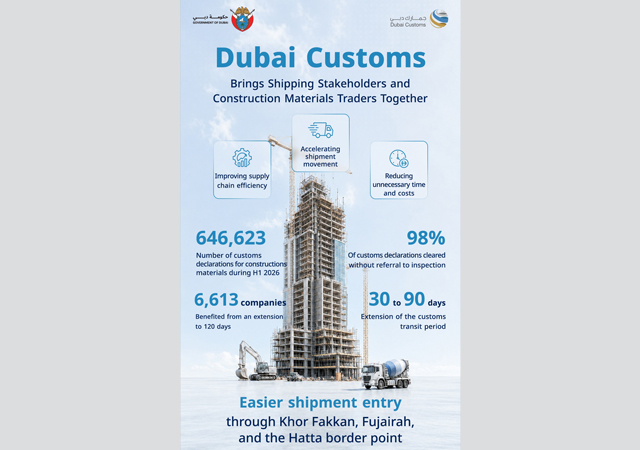
Key aspects highlighted at the Dubai Customs meeting with traders, airlines and ports.
A month later, on August 27, Dubai Customs translated part of that agenda into sector‑specific action, convening construction materials traders with Emirates SkyCargo, flydubai, dnata, DP World, the Dubai Maritime Authority, Dubai Chamber and the Emirates Shipping Association to tackle rising costs and clearance frictions.
The authority cited 1.57 million customs declarations for construction materials in 2025 and 646,623 in the first half of 2026 as evidence of the category’s continued weight in the emirate’s trade ecosystem and its direct link to urban growth and development projects.
Air freight, dangerous goods and data
With sea freight rates and insurance costs climbing, traders pressed for more competitive air cargo options, particularly for time‑critical shipments from China. Carriers said they could explore tailored rates if given clearer advance data on material types, volumes and delivery windows.
Participants also flagged restrictions on shipping chemicals and other inputs classified as Dangerous Goods by air. Airline representatives explained that acceptance and permitted quantities depend on each product’s UN number, MSDS documentation and category‑specific safety rules. The group agreed that earlier, more granular data from traders would allow carriers to pre‑assess feasibility against aircraft capacity and schedules, turning a regulatory hurdle into a workable operational process.
Risk‑based inspections
On customs controls, Dubai Customs said its risk management system, which factors in commodity type, origin, shipper history and other indicators, now clears around 98 per cent of declarations without physical inspection, with random checks kept below one per cent. The authority said this balance, supported by AI‑driven risk analysis, is designed to speed trade while safeguarding compliance.
Dubai Customs pledged to convert the roundtable feedback into “practical, actionable and measurable” solutions with relevant agencies, focusing on maintaining materials flow, lifting operational efficiency and reinforcing supply chain resilience.
120‑day duty suspensions, instalment payments
The roundtable came as Dubai Customs rolls out a wider package of trade facilitations aimed at stabilising businesses amid shifting global trade patterns. Under Customs Notice 12/2026, 6,613 companies received a 120-day extension on duty suspension periods for import-for-re-export, temporary admission and transit transactions, improving cash flow and continuity.
Additional notices introduced instalment payment options for duties, cut financial penalties by 80 per cent, extended transit periods from 30 to 90 days, and enabled shipment entry via Khor Fakkan, Fujairah and the Hatta border under the customs guarantee system, alongside prioritised processing for food and pharmaceutical consignments.
The measures signal Dubai’s push to keep construction materials – a critical input for its giga-projects and infrastructure pipeline – moving faster and at lower cost, while giving traders more flexibility to manage obligations in a volatile trading environment.
Together, the federal and emirate‑level moves signal a coordinated effort to align high‑level logistics policy with the day‑to‑day realities of moving cement, steel, chemicals and finishes into the UAE’s construction pipeline.