















As Middle East construction projects grow in scale and complexity, the safety of the built environment has shifted from a secondary consideration to a primary architectural mandate. Specialised solutions, such as fire protection, blast resistance, and advanced access control, are no longer niche requirements; they are integral components of modern building design.
Saudi-based ALUPCO is responding to that shift through its Special Building Solutions (SBS) division, a unit established to integrate specialised protection technologies into major building and infrastructure projects.
“Today, protecting people, property, and infrastructure is no longer just a corporate objective, it has become a fundamental requirement in modern building design. In light of the current situation in the region, there is a growing emphasis on enhanced safety, security, and strict regulatory compliance.” Mohammed Nabil, General Manager – Special Building Solutions at ALUPCO, tells Gulf Construction’s Bina Goveas in an exclusive interview.

‘SBS serves as a one-stop shop for safety and security systems, integrating specialised solutions into a single, streamlined offering for developers, consultants, and contractors’ – Mohammed Nabil
With increasing urban density, critical infrastructure projects, and higher safety regulations, buildings must be designed to withstand risks such as fire, blast, and security threats, he adds.
Through partnerships with international manufacturers and local fabrication capabilities, ALUPCO’s Special Building Solutions division is positioning itself as a provider of safety-focused architectural systems tailored to the region’s mega and giga projects.
Nabil says the unit represents a strategic expansion of the company’s traditional aluminium systems business into the broader field of building performance and protection.
“ALUPCO’s diversification strategy focuses on developing business units that respond to evolving market needs beyond aluminium extrusion. The SBS division was created to address the growing demand for specialised building systems focused on performance, safety, security, and regulatory compliance,” he explains.
The initiative reflects a broader trend within the construction sector, where stricter building codes and rising urban density are pushing developers to incorporate advanced safety systems earlier in the design process.
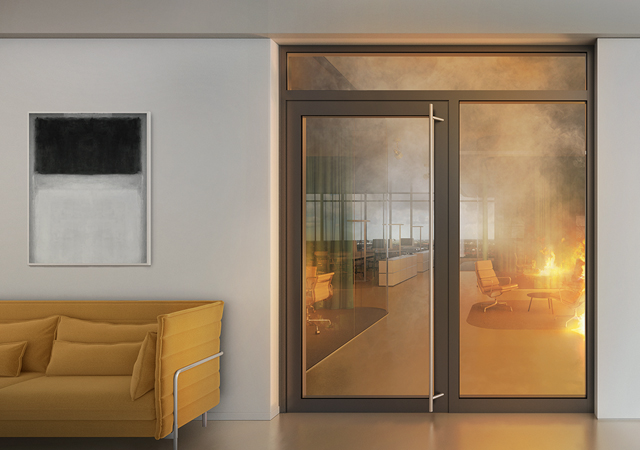
Fire-rated glazing systems combine safety with design flexibility in areas such as corridors, façades, and internal partitions.
Integrating global technology into projects
To meet these rigorous demands, SBS has formed partnerships with some of the most respected names in global building technology, including Schueco, Jansen, Siderise, Aumuller, Assa Abloy, and Sommer. These collaborations allow ALUPCO to act as a bridge, bringing internationally tested systems to the Gulf and adapting them for local conditions and project requirements.
Nabil says SBS acts as a technical integrator, combining different systems into a coordinated offering for developers and contractors. It provides technical support, engineering coordination, and local fabrication to ensure smooth project execution and compliance with international and local standards, he adds.
A key advantage for regional developers is the ability to source these high-specification systems locally.
“SBS serves as a one-stop shop for safety and security systems, integrating specialised solutions into a single, streamlined offering for developers, consultants, and contractors,” Nabil states.
Local production also forms a key component of the strategy.
“Schueco and Jansen are fabricated locally in Saudi Arabia through ALUPCO’s authorised facilities. This local capability allows us to provide faster delivery, closer technical coordination with project teams, and full compliance with project specifications and regional requirements,” he says.
The localisation of fabrication helps shorten supply chains for technically complex façade and protection systems, which can otherwise require lengthy import timelines.
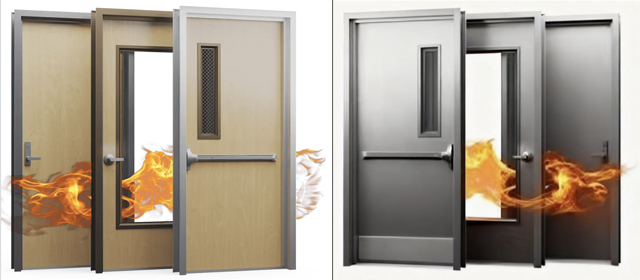
SBS provides Assa Abloy hollow metal doors with fire ratings of up to 180 minutes.
Fire safety at the forefront
With the supply and partnership framework in place, the most immediate application of these systems lies in one of construction’s most critical challenges: fire safety – particularly in dense urban environments where evacuation times and structural performance can determine the scale of damage during emergencies.
Fire safety remains a cornerstone of the SBS offering with its portfolio covering a range of fire-rated glazing systems designed to contain flames and smoke while maintaining architectural transparency.
“Fire-rated glazing systems combine safety with design flexibility in areas such as corridors, façades, and internal partitions,” Nabil states.
ALUPCO’s fire-rated glazing systems include both steel- and aluminium-framed options capable of achieving fire resistance ratings ranging from 30 to 120 minutes under European testing standards.
These systems are typically used in internal partitions, corridors, curtain-walls and door assemblies where visual openness must be balanced with stringent fire performance requirements.
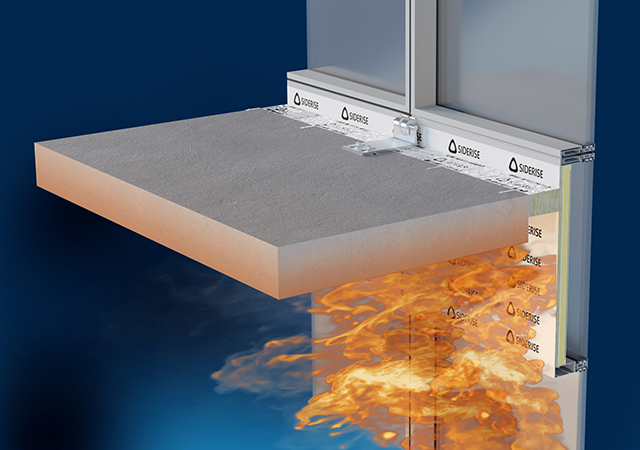
Siderise firestop and cavity barrier systems are engineered to restrict the concealed spread of fire and smoke through façade cavities and building voids.
“Steel and aluminium fire-rated glazing systems are used in a wide range of applications in high density urban buildings,” Nabil says. “Aluminium systems are typically used for internal partitions, corridors, offices, and façade elements where transparency and lighter structural requirements are preferred. Steel systems are often specified for larger openings, high traffic areas, or locations requiring higher structural strength.”
He adds that these systems can also be engineered to meet additional protection requirements.
“In addition, both aluminium and steel options can be designed to meet fire-rated, blast-resistant, or bullet-resistant requirements, making them suitable for airports, commercial towers, government buildings, hospitals, and other critical infrastructure projects.”
Fire-rated doors give people more time to evacuate the buildings.
Preventing fire spread
Containing fire at visible openings is only part of the equation – what happens inside the unseen cavities of a façade can be equally decisive. Passive fire protection solutions supplied through SBS include firestop and cavity barrier systems from Siderise, which are designed to maintain compartmentation within buildings.
“Siderise firestop and cavity barrier systems are engineered to restrict the concealed spread of fire and smoke through façade cavities and building voids, helping maintain the building’s overall fire safety strategy and integrity of compartmentation,” Nabil says.
He adds that factory-engineered design of these systems plays an important role in reducing installation errors on complex façade systems. Such passive systems are increasingly specified for high-rise buildings, where façade cavities can act as channels for fire propagation if not properly protected.
According to SBS, these solutions utilise stone wool-based materials engineered for dry-fix installation, eliminating the need for additional sealants to achieve certified fire resistance.
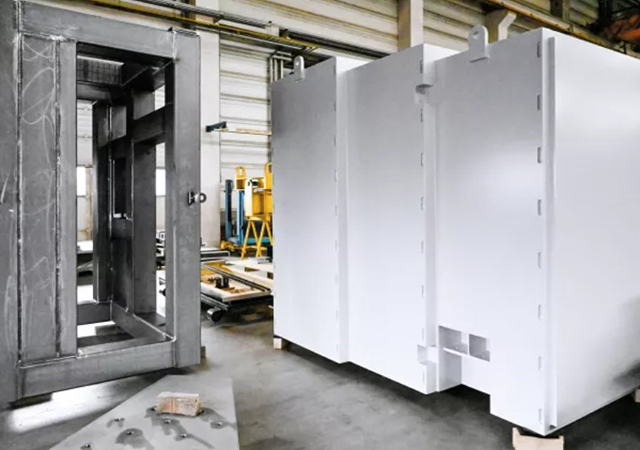
Sommer products are increasingly specified for critical infrastructure projects like nuclear plants and energy facilities.
Managing smoke and heat
Containing fire and smoke within a building’s structure, however, is only effective if occupants can move through it safely – making the performance of doors and smoke extraction systems equally critical.
Smoke inhalation remains one of the leading causes of fatalities during building fires. To address this risk, SBS includes automated window control systems designed to extract smoke and heat during emergencies.
“Integrating Aumuller automated window drives ensures that heat and smoke are efficiently extracted during a fire. By removing smoke, it reduces the risk of smoke inhalation, improves visibility, and keeps escape routes clearer, allowing occupants to evacuate safely and move within the building more easily, thereby significantly improving survival rates,” Nabil says.
These automated drives can operate chain, spindle or rack-and-pinion mechanisms to open windows during emergencies, creating natural smoke extraction points within buildings.
Another key component of the SBS offering is fire-rated hollow metal doors capable of providing very high fire resistance. For high-traffic areas and critical escape routes, SBS provides Assa Abloy hollow metal doors with fire ratings of up to 180 minutes. Nabil emphasises that complying with these ratings can mean the difference between life and death during an emergency, providing the necessary time for safe evacuation and protecting the integrity of the building’s compartments.
“Fire door ratings are critical for blocking fire and smoke passage, giving occupants time to evacuate safely. The required rating is determined by a fire and life safety (FLS) consultant based on factors such as building size and height, occupancy type, number of exits, compartmentation, and door location,” he explains. “Higher rated doors, like those up to 180 minutes, are essential in large or complex buildings to ensure safe evacuation and protect property.”
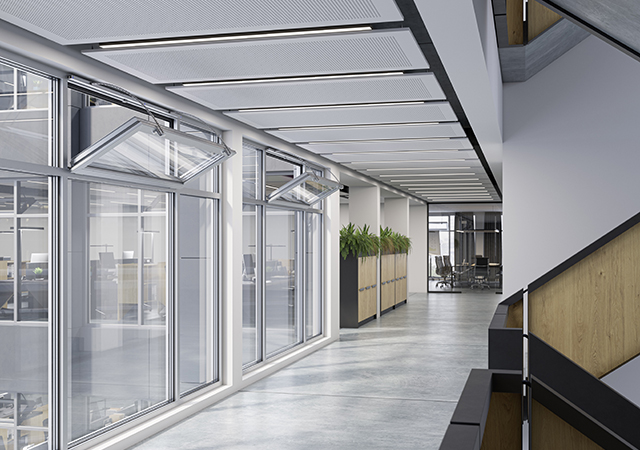
Aumuller automated drives can operate chain, spindle or rack-and-pinion mechanisms to open windows during emergencies.
Expanding the definition of building safety
Nabil says the role of building protection systems has expanded significantly in recent years, particularly in the Middle East where large-scale developments and critical infrastructure projects are becoming more common.
“With increasing urban density, critical infrastructure projects, and higher safety regulations, buildings must be designed to withstand risks such as fire, blast, and security threats,” he says.
The company’s approach reflects an emerging industry shift in which safety systems are integrated into architectural design rather than added later as standalone components.
For large infrastructure developments such as airports or government buildings, the concept of safety now extends beyond fire protection alone.
“For high-profile infrastructure, safety today goes beyond basic fire protection. It includes a comprehensive approach that integrates fire-rated systems, blast resistance, ballistic protection, smoke control, and secure access solutions,” Nabil says. “Through SBS, we aim to provide integrated safety systems that enhance the resilience of buildings and critical infrastructure while still supporting modern architectural and operational requirements.”
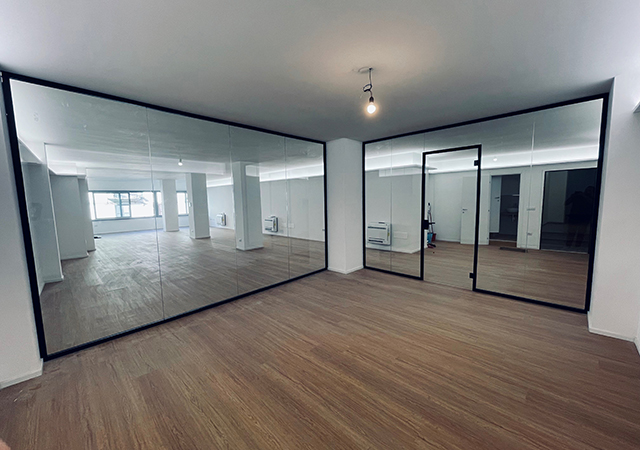
Aluminium glazing systems are used for internal partitions, where transparency and lighter structural requirements are preferred.
Security at the extreme end of the spectrum
As regional challenges evolve, the demand for protection against more extreme threats, such as ballistic impact and explosive blasts, has surged. Nabil notes that for high-profile infrastructure, safety must now be viewed through a comprehensive lens that integrates multiple layers of protection.
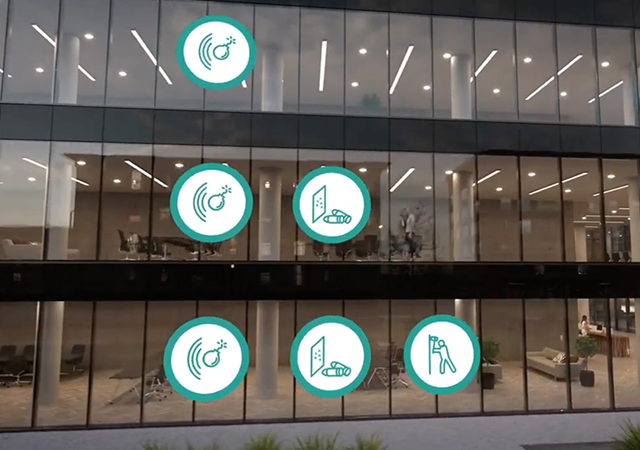
The Sommer portfolio within SBS caters to the most sensitive end of this spectrum, offering products such as burglar-resistant doors, blast-resistant facades, and even airplane crash doors. These products are increasingly specified for:
• Government and military facilities, which require blast-, ballistic-, and intrusion-resistant doors;
• High-risk public infrastructure such as airports, embassies, police stations;
• Critical infrastructure projects like nuclear plants and energy facilities, where specialised high-security gates and barriers, including doors designed for radiation and blast protection are used; and
• High-security commercial buildings, museums, financial institutions and data centres that demand enhanced physical protection.
Despite the technical complexity required to absorb and dissipate blast pressure, Nabil insists that security does not have to come at the expense of beauty.
“These technically advanced façade systems are engineered with specialised materials and structural designs that absorb and dissipate blast pressure. At the same time, the systems are designed to maintain a clean and modern architectural appearance, allowing buildings to achieve high levels of protection without compromising their visual design,” he says.
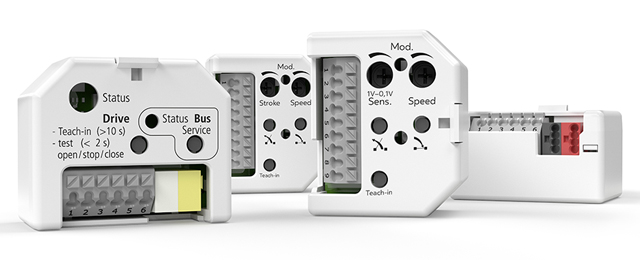
Integrating Aumuller automated window drives ensures that heat and smoke are efficiently extracted during a fire.
Supporting modern interiors
While much of the SBS portfolio focuses on safety, the company also supplies systems designed to improve interior comfort and acoustic performance.
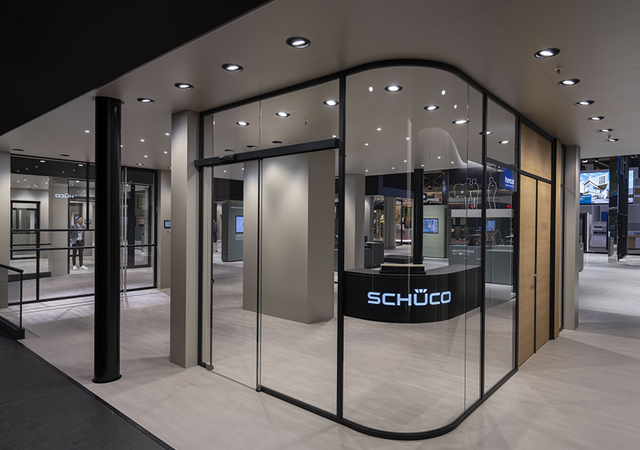
Schueco internal partition systems supplied through SBS offer sound insulation levels approaching 50 decibels while maintaining transparent architectural layouts.
“While safety and security are key aspects of SBS, systems like Schueco internal partitions focus primarily on acoustic performance and interior comfort. With high sound insulation levels, these partition systems help create quiet and productive indoor environments in offices and commercial spaces,” Nabil says. “This allows SBS to support modern interiors that prioritise comfort, privacy, and design flexibility, complementing other building systems that address safety and security requirements.”
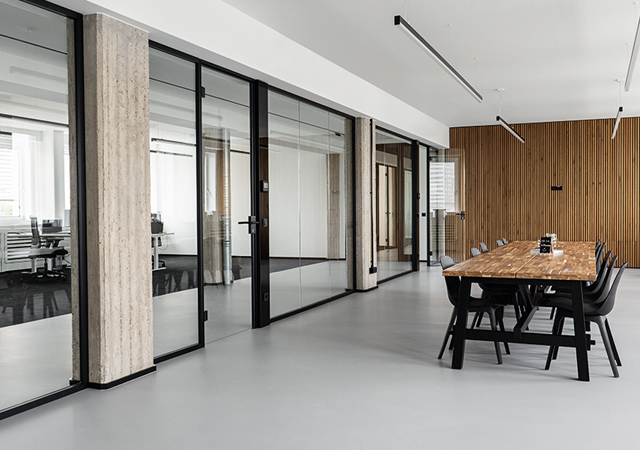
Schueco internal partition systems offer sound insulation levels approaching 50 decibels while maintaining transparent architectural layouts.
Certification and performance assurance
ALUPCO-SBS places a heavy emphasis on third-party certification with many of its products carrying Intertek and UL certification, which Nabil describes as essential for risk mitigation.
“Certification is critical when specifying safety-related building products,” Nabil explains. “For developers and architects, specifying first-hand tested solutions reduce risk, ensures regulatory compliance, and guarantees that the system will perform as intended in critical situations.”
The technical rigour required for these products is also being driven by the ambitious giga-projects currently under way in Saudi Arabia. Developments such as NEOM, Qiddiya, and The Red Sea Project are setting a new bar for the entire industry.
“Developments such as NEOM, Qiddiya, and The Red Sea Project require compliance with stricter international codes, advanced testing, and higher performance benchmarks than typical projects. As a result, contractors and suppliers must adopt higher standard design, certification, and installation practices, which are gradually setting a new standard for the broader Saudi construction industry,” he says.
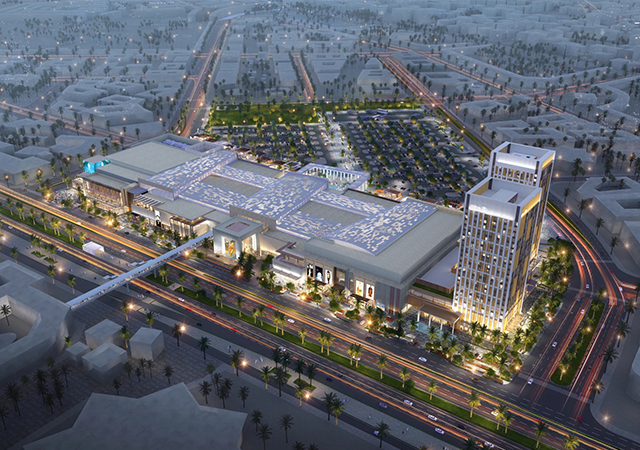
ALUPCO’s Special Building Solutions unit is currently involved in several major developments across Saudi Arabia including The Avenues Khobar, SEVEN entertainment destinations, AMAALA, Red Sea Project, Diriyah, Qiddiya, MISK, and Aramco Stadium.
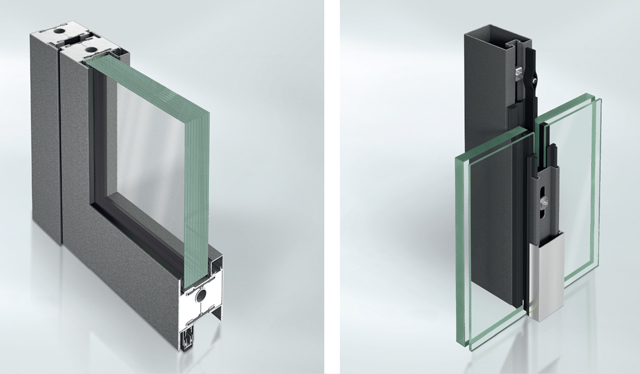
Jansen products are fabricated locally in Saudi Arabia through ALUPCO’s authorised facilities.
A vision for a resilient future
Looking ahead at the GCC market over the next five years, Nabil anticipates that the strongest growth will continue to be in the specialised protection sector. This growth is being fuelled by massive investments in the tourism and energy sectors, as well as a heightened awareness of the need to protect lives and property in a complex security environment.
For Nabil, the value of the SBS unit lies in its ability to turn complex safety requirements into reliable, buildable solutions from the earliest stages of design.
“For a developer or architect new to SBS solutions, we would like to assure that these systems enhance both safety and resilience. They provide protection against fire, blasts, and ballistic threats, ensuring that the building’s structure remains secure under extreme conditions,” Nabil says. “Beyond structural performance, SBS solutions safeguard occupants, giving confidence that lives and property are protected, while also enabling architects to integrate advanced safety without compromising design or aesthetics.”
“By working with SBS from the early design stage, developers and architects can seamlessly integrate safety, security, and aesthetics, turning complex requirements into reliable, buildable solutions that enhance both functionality and long-term value,” he concludes.