





















With UAE temperatures rising faster than the global average, HVAC infrastructure is facing unprecedented strain – and the peak of this demand has yet to arrive. However, the real test for the industry isn’t just keeping buildings cool but also doing so sustainably.
Energy-efficient, climate-conscious design can no longer be an afterthought; it must be central to resilient cooling in the region, and this can only happen when both data and design unite.
Sustainability has become a core political priority across the Middle East. The UAE has pledged to become net zero by 2050, while Saudi Arabia has made the same commitment with a slightly longer 2060 deadline. A myriad of strategy roll-outs outlining how these obligations will be met against a backdrop of rapid urbanisation in cities such as Dubai and Riyadh, have nearly all highlighted that decarbonising buildings and infrastructure must be a central focal point.
While sustainability is certainly high on developers’ agendas, it must also be balanced with a number of other considerations, including operational efficiency, cost effectiveness, and high-quality end-user experience. To address these concerns, developers require an HVAC system that utilises both innovative design and advanced data capabilities.
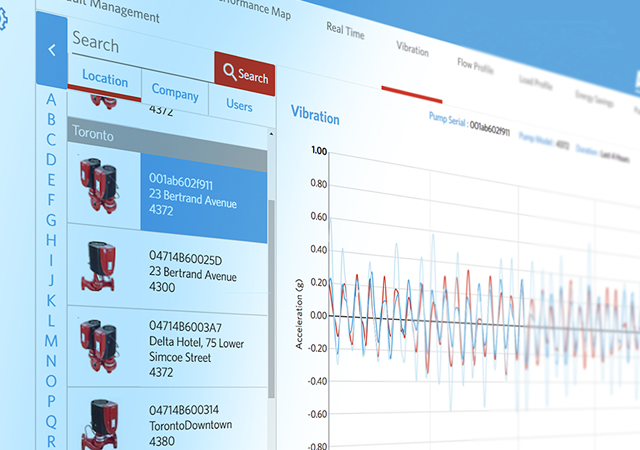
Intelligent, built-in controllers can be used to continuously monitor the pump’s power consumption and speed.
A sustainable, luxury experience
Systems that are designed for a comfortable experience don’t have to compromise on sustainable credentials. For example, it is common for HVAC systems to require a remote pressure sensor to monitor and maintain a consistent pressure, ensuring that chilled water flow meets demand and delivers a comfortable internal temperature. However, it adds cost to the project and it is extremely challenging to install and connect the wiring back to the pump in the mechanical room when retrofitted into an existing, completed building. This can be especially difficult to navigate for places that require a luxury aesthetic, such as hotels, restaurants, and high-end properties. These establishments would not want to see tradesmen accessing ceiling voids, to install cable, during business hours.
Technology that automatically adjusts to match the system’s pressure and flow but doesn’t require an external sensor, is increasingly being utilised across the industry. Intelligent, built-in controllers can be used to continuously monitor the pump’s power consumption and speed, while ensuring pumps are meeting the correct head and flow measurements that are critical to overall performance.
Not only does this mean that a building’s operations don’t have to be compromised, but sensorless technology is typically more energy efficient. These controllers use advanced algorithms to calculate the system’s adjustments in real-time, precisely increasing or decreasing speed and pressure.
Streamlining products, decreasing waste
Components that were once integral to HVAC systems have now been made redundant on more advanced models. One example is concrete inertia bases, which are steel frames filled with concrete that support pumps to reduce vibration and noise. A second example is the use of flexible connectors, which allow the pumps’ inertia base to flex as they move on their springs.
On older designs, pump vibration is often caused by motors mounted separately to the pump end and connected using a flexible coupling. This requires specialist and repeated alignment of the motor shaft to the pump shaft to avoid excess vibration. This is prevented by attaching the motor’s precision engineered end mounting flange to the pump’s mounting flange, maintaining permanent alignment.
Mechanical seals are easily serviced in minutes as they are externally mounted and accessible by removing the split coupling’s bolts, leaving a gap between the pump and motor shafts to drop out the old and install the new seal. Sophisticated design features, such as dynamically balanced impellers minimise vibration further.
By combining these mechanical changes with improved installation methods, such as in-line pipe mounting – a method of fixing pump directly to the piping run – the need for concrete inertia bases and flexible connectors is eliminated altogether.
Not only does this drastically reduce the amount of embodied carbon in the system through removing the need for a carbon-dense material, such as concrete, but it is also more cost effective. It reduces both the upfront installation cost, as the system is more streamlined, and the long-term operating cost, as less vibration means the system is more energy efficient and has lower maintenance needs.
The future is data
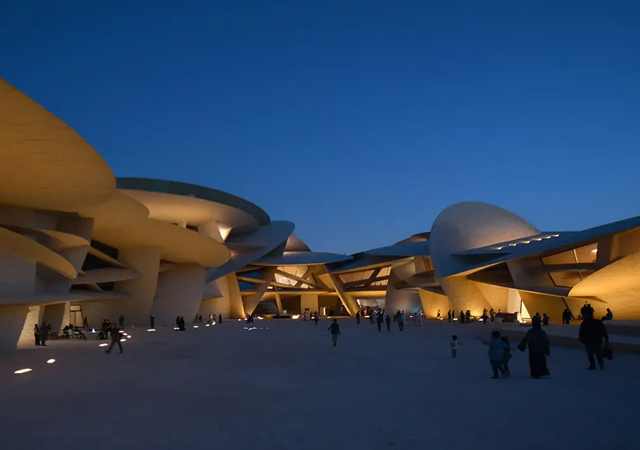
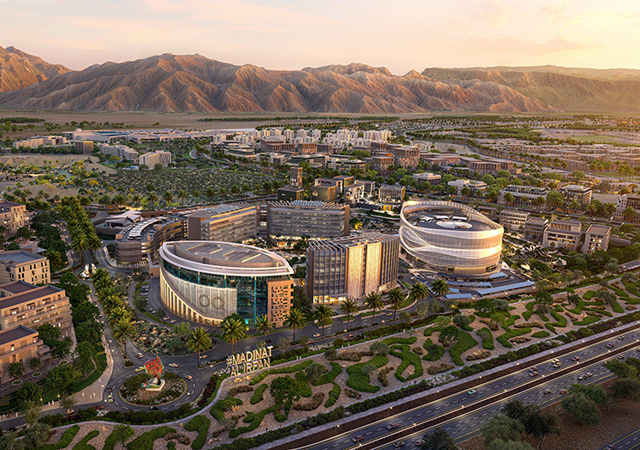
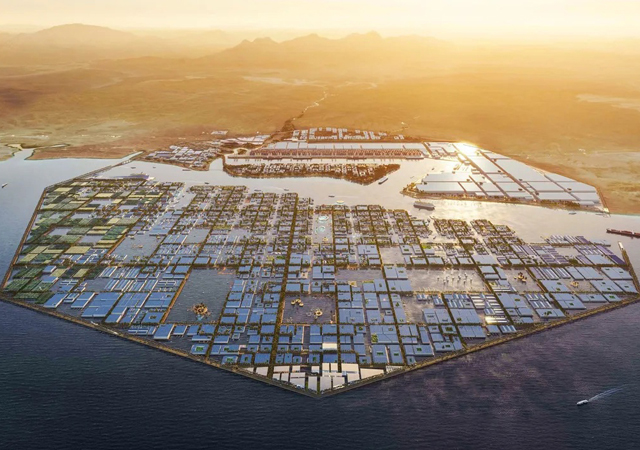
The Middle East is leading the way when it comes to building smart cities, with notable projects currently under way including Masdar City in the UAE, NEOM in Saudi Arabia and Lusail in Qatar. Conceived on the principle of connectivity, smart cities leverage data analytics, as well as IoT and other types of digital technology, to increase operational efficiency, aid sustainable processes, and improve quality of life for citizens. To truly be considered a smart city, data analytics must be integrated into a building’s critical systems, including HVAC.
Data analytics enables HVAC systems to automatically fine-tune performance in real time, improving energy efficiency. The data is displayed on an easy-to-use interface that can be accessed remotely, giving full visibility 24/7. Automated reports can be set up to ensure that regular checks are not missed due to human error.
The diagnostic program captures performance trends, monitoring heating and cooling loops by key indicators of performance, such as flow rate, temperature, and pressure. This allows businesses to shift from costly, reactive repairs to proactive maintenance. This limits equipment failure and machine downtime, while allowing system to be easily optimised, reducing performance drift. These changes mean that equipment is able to perform at its peak ability for longer and be used until the end of its lifespan, reducing unnecessary waste.
Sustainable systems make commercial sense
Sustainable systems often utilise cutting-edge technologies and advanced analytics to achieve green credentials, which can require a larger upfront investment. This can deter some developers from choosing these products; however, there is a strong commercial case.
At a basic level, more advanced systems are more energy efficient and use less water, reducing operating costs long-term. Increased efficiency has a direct correlation with improved performance, giving tenants, customers and building users more comfort, and a better experience.
In short, sustainable operations cost less and perform better. Developers should look at opting for HVAC systems with robust sustainability credentials as standard, not just to lower carbon emissions and combat climate change, but also to be part of a sustainable, connected future.
* Qusai Abuabed is Sales Director, Middle East and Africa at Armstrong Fluid Technology, a global leader in intelligent, energy-efficient fluid-flow and whole-building mechanical solutions.